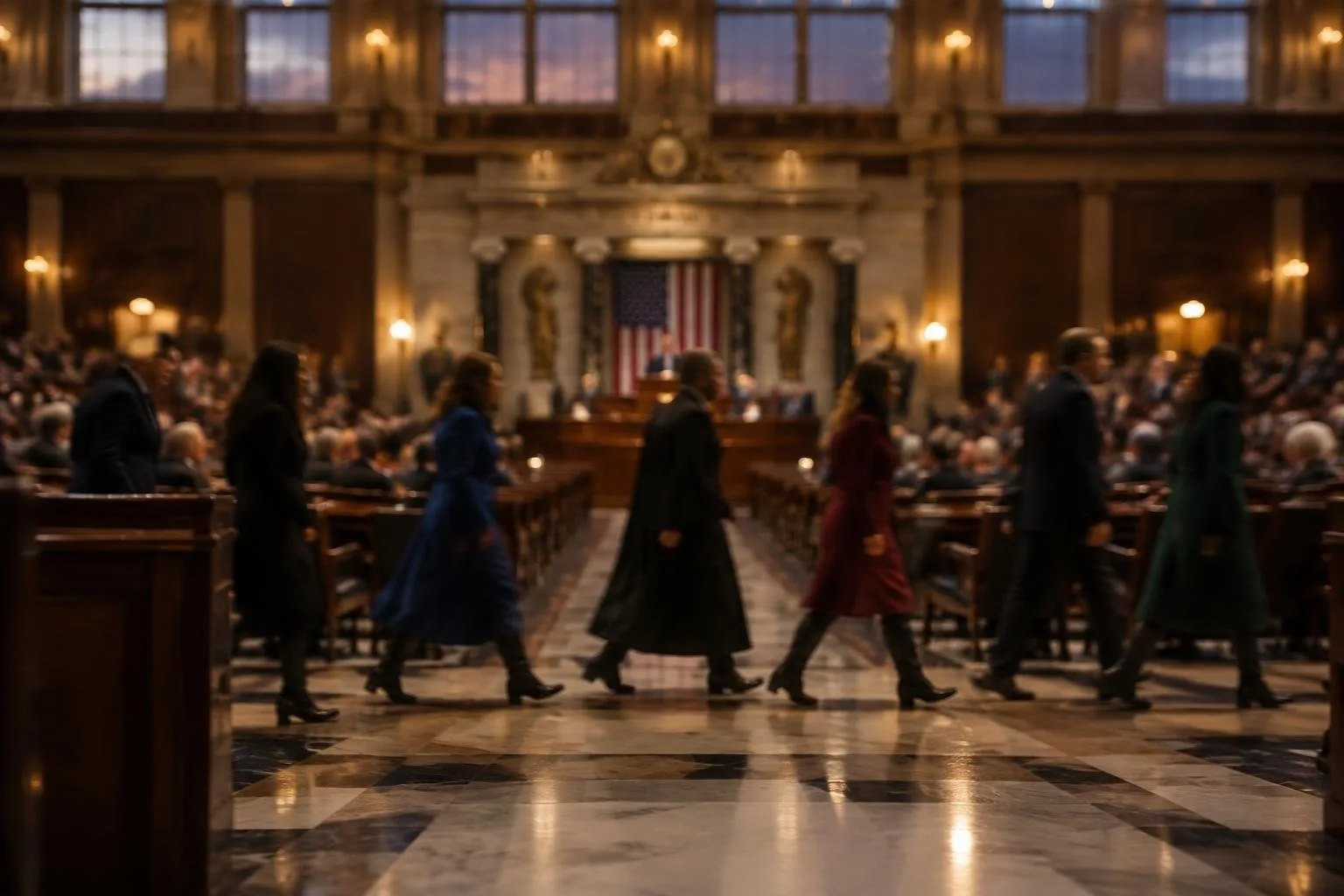
The 2026 midterm elections delivered a sweeping victory for Democrats, flipping Senate seats in traditionally red strongholds such as Kansas, Texas and South Carolina, while also handing the GOP a series of unexpected gubernatorial defeats. Donald Trump – the party’s most visible figure – has become a focal point for criticism, not only for his policy positions but for an unusually public fascination with the physical appearance of fellow Republicans and high-profile athletes. Analysts suggest that the relentless stream of compliments about muscular backs, sculpted shoulders and even specific body parts may have diverted attention from core campaign messages and alienated moderate voters.
From Ohio to the golf course: a catalog of compliments
During a series of political rallies that stretched from Kentucky to Florida, Trump repeatedly singled out Sen. Jon Husted’s posterior, describing it as “a very powerful ass” at an October 17, 2025 rally in Kentucky. He went on to claim he had “examined his ass” – a remark that, according to the president, lifted Husted’s poll numbers by 12 points, yet failed to prevent Democrat Sherrod Brown from winning the Senate seat. Similar language resurfaced in Pennsylvania on an October 23, 2025 gathering, where Trump launched a twelve-minute diatribe on late golf legend Arnold Palmer’s “unbelievable genitalia,” labeling the champion “all man.”
The pattern continued with several other figures. At a Florida rally on October 23, Trump lauded Health Secretary Robert F. Kennedy Jr.’s physique, asking the crowd, “Did anybody ever see the body on Bob? He’s got the body of a 30-year-old.” In Dalton, Georgia, on October 16, he praised Senate candidate Mike Collins as “all man,” complimenting his “white hair” and “big, strong build,” while dismissing opponent Jon Ossoff with a Pee-wee Herman comparison. Even 72-year-old billionaire gubernatorial hopeful Rick Jackson received a flattering line: “He’s a very handsome, distinguished, beautiful-looking guy.”
Beyond politics: athletes and entertainers under the spotlight
Trump’s admiration extended to the sports arena. On an October rally in Kentucky, he described congressional candidate Ed Gallrein as “beautiful” and “right out of central casting.” In May, New York Giants quarterback Jaxson Dart was introduced with praise for his “tree-trunk legs,” and the former president later confessed he wished he looked like the NFL star. Former Rep. Matt Gaetz, addressed at a 2018 Florida rally, earned a flattering “young, handsome, going places” remark. The president’s focus on athletes also reached the UFC, where Brazilian fighter Paulo Costa was called “a beautiful guy, too good looking to be a fighter,” and Kansas City Chiefs kicker Harrison Butker was termed a “handsome guy” during a July 2025 White House event.
Republican operatives point fingers at Trump
In the aftermath of the Tuesday night results, a wave of frustration washed over the GOP. Texas lobbyist Bill Miller told the BBC that the defeat was “a total, complete rejection of President Trump,” describing it as “a disaster of the first magnitude.” Minnesota strategist Gregg Peppin added that “one mistake after another” – specifically Trump’s policies and his fixation on construction projects – turned voters away. A White House insider cited public disapproval of the Iran war, tariffs and the immigration crackdown as a “perfect storm” that amplified the backlash.
Despite the anger, some party insiders caution against placing all blame on the president. Iowa Republican National Committeeman Steve Scheffler noted that while Trump’s influence remains strong, “there were things you wish he said differently” on the night of the vote. Trump himself broke his silence only to post on Truth Social, claiming that had he been on the ballot the party “would have won in a landslide.” The GOP’s own campaign machinery – including the MAGA Inc. Super PAC, which spent hundreds of millions – also drew criticism for fielding weak Senate candidates in battleground states such as Georgia, Michigan and Texas.
Strategic fallout and the road ahead
The 2026 results mark only the third instance since 1934 that the party occupying the White House gained seats in a midterm election, and even then the gains were modest. Democrats not only reclaimed the Senate seat in Ohio but also secured victories in states that had been securely red for decades, including a historic win in Kansas – the first Senate pickup for Democrats there since 1932. As the new Democratic majority prepares to investigate the administration’s policies, Republicans must confront a post-Trump reality, weighing whether the president’s penchant for physique-centric commentary helped sabotage their electoral chances.
Whether future campaigns will tone down the flamboyant body praise or double down on it remains an open question. What is clear, however, is that the midterm elections have become a litmus test for the party’s willingness to adapt its messaging strategy, and the bizarre body-compliment routine may now be seen as a liability rather than a rallying cry.