
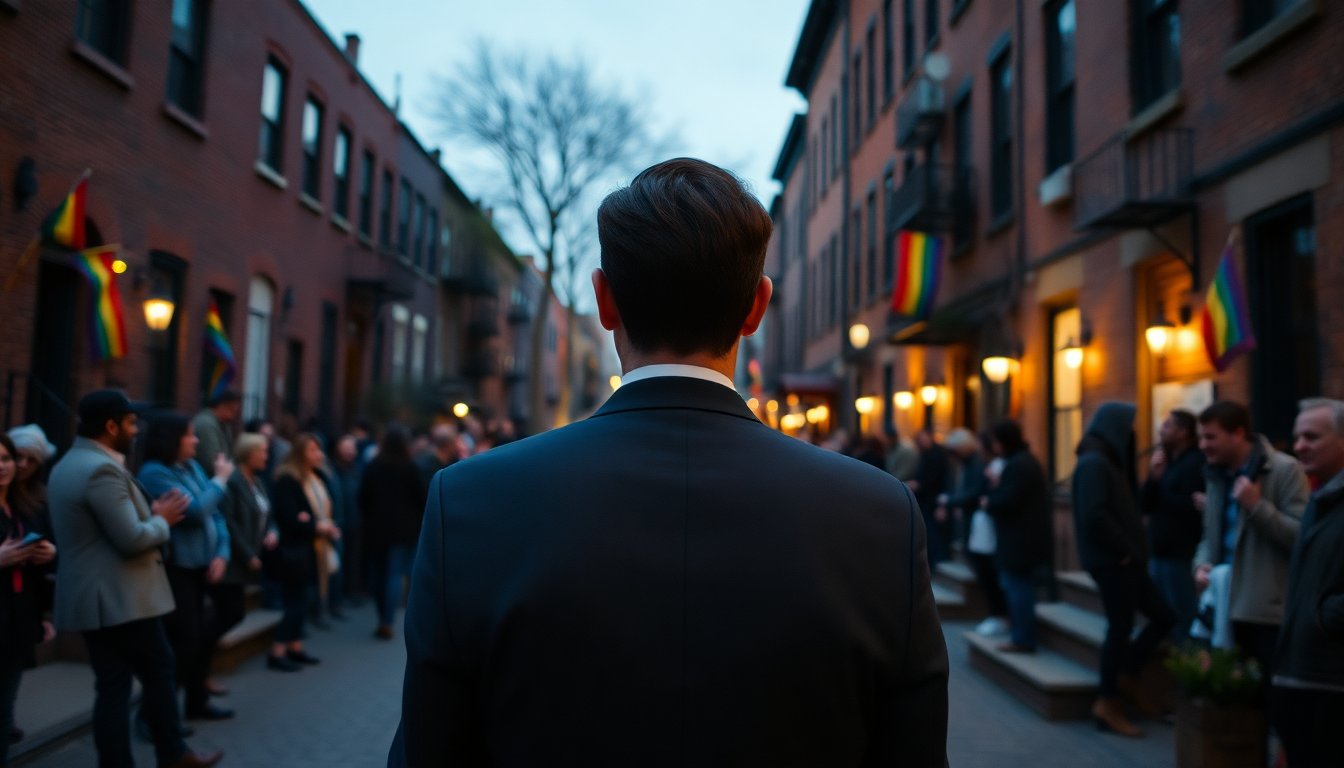
The neighborhoods of Chelsea, Hell’s Kitchen, the West Village and Greenwich Village are more than real estate lines on a map: they are the home of the Stonewall Inn, a symbol of modern LGBTQ+ rights. That history frames a nearby contest for the New York City Council seat representing Manhattan’s 3rd District, where a vacancy has prompted an special election that draws attention to who speaks for this community and what representation should prioritize.
The seat opened after Councilmember Erik Bottcher left office in February to join the New York State Senate, triggering a quick campaign that unfolded under ranked-choice voting rules. Early voting ran from April 18 to April 26, with in-person voting scheduled for Tuesday, April 28. The winner will serve the remainder of Bottcher’s term through December, ahead of a separate Democratic primary in June and a general election in November for a full four-year term.
Who is running and what they represent
The ballot features four Democratic-aligned contenders running on nonpartisan lines. Leading the pack in endorsements and name recognition are Carl Wilson, Bottcher’s former chief of staff, and Lindsey Boylan, a figure known for her earlier role in state politics and for being the first woman to publicly accuse former Governor Andrew Cuomo of sexual harassment. The other two candidates — Layla Law-Gisiko and Leslie Boghosian Murphy — have campaigned on local housing and neighborhood concerns and have drawn attention for grassroots organizing inside the district.
Carl Wilson: continuity and community ties
Carl Wilson positions himself as a candidate of continuity, emphasizing years of district-level organizing and his service as Bottcher’s aide. Supporters within the Manhattan Democratic establishment — including Council Speaker Julie Menin — back Wilson, in part because his candidacy would extend a string of openly LGBTQ+ council members who have represented the district since 1992. Wilson describes his identity as an asset to his work and stresses that his platform and experience should be central to voter decision-making.
Lindsey Boylan: progressive ally and contested profile
Lindsey Boylan drew a high-profile endorsement from Mayor Zohran Mamdani, who framed the pick as choosing an ally for a progressive agenda on the council. Boylan has a history of local advocacy, national visibility from her accusations against Cuomo, and backing from groups such as the Working Families Party. Critics and some local activists have questioned aspects of her personal and political record, while Boylan herself emphasizes engagement with LGBTQ+ leaders and promises to center the district’s history and needs.
Policy contrasts and campaign priorities
Beyond identity, the contest hinges on concrete policy proposals. Both major contenders have pledged to sit with the council’s progressive caucus, but their public plans differ. Wilson highlights a focus on expanded mental health resources, enhanced HIV services, inclusive shelters and youth programming, and protections for gender-affirming care. Boylan has proposed creating a dedicated $20 million city fund for gender-affirming care, and a $15 million legal defense fund for local LGBTQ+ organizations facing litigation costs tied to public controversies.
Protests, buffer zones and free expression
A flashpoint in the race concerns recent legislation proposed by Speaker Menin to create buffer zones around schools and houses of worship, a response to demonstrations that drew attention citywide. Buffer zones here refers to measures limiting protests within a set radius of sensitive sites. Boylan criticized the bills as a threat to civil liberties and invoked the historical role of protest — including the Stonewall uprising — while supporters argue the measures protect vulnerable communities from targeted demonstrations. The debate highlights the tension between public safety, free speech and the symbolic protections tied to historic districts.
Why representation matters in this district
The contest is being read by many as a test of whether identity or ideology should carry more weight in this seat. Since the early 1990s, voters in the 3rd District have consistently chosen openly LGBTQ+ councilmembers, a pattern that shapes local expectations. Advocates for continuing that tradition argue that shared lived experience matters for constituent trust and advocacy on issues like transgender care and community safety. Others say ideological alignment with the mayor and progressive priorities is more important, especially as New York City wrestles with housing affordability, public services and civil rights challenges.
With ranked-choice ballots in play and strong opinions on both sides of the representation question, the special election serves as a concentrated moment for district residents to weigh heritage against policy strategy. Whoever wins will take office to finish Bottcher’s term and will also enter a short campaign cycle that will determine the council’s next full-term representative in June and November; the outcome may signal how voters in one of the city’s most symbolic neighborhoods want power to be exercised on their behalf.


