
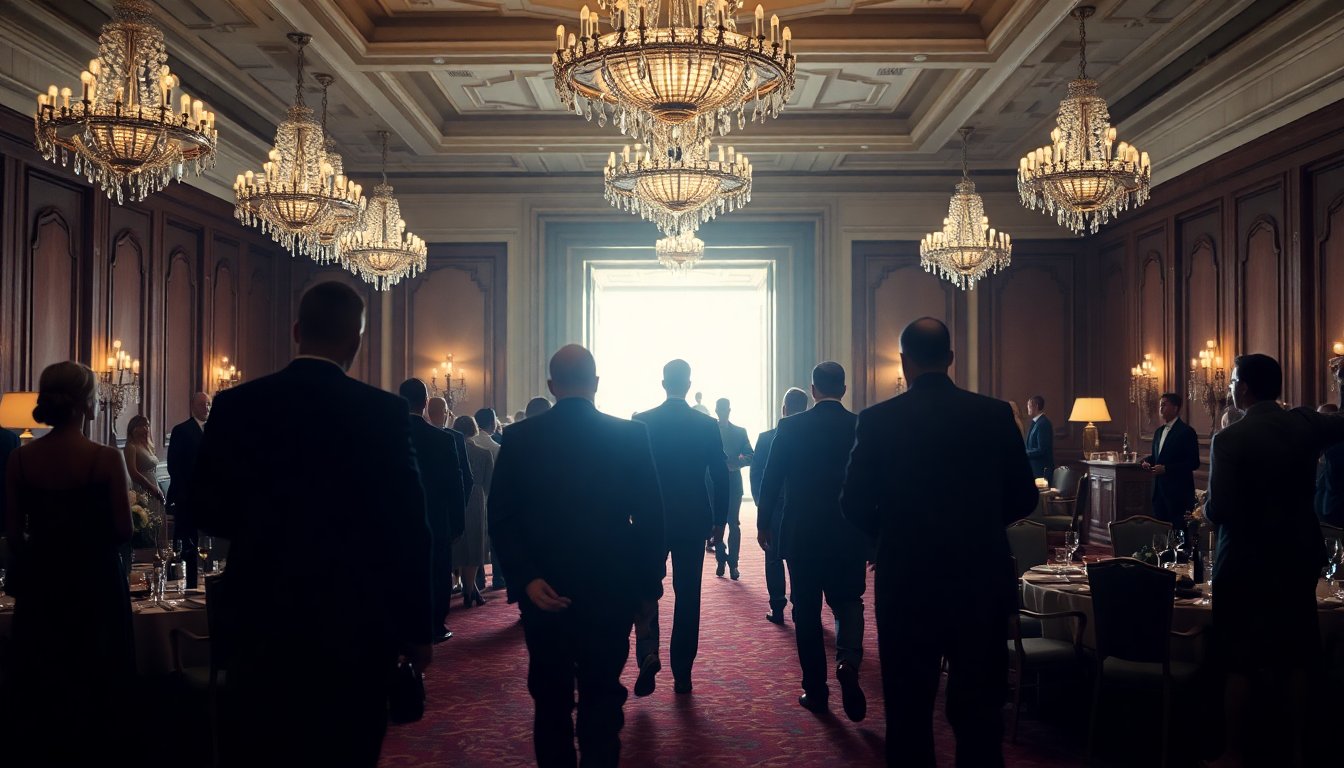
The evening of April 25, 2026, at the Washington Hilton took an unexpected turn when a security alert forced the rapid removal of President Donald Trump and the first lady from the ballroom during the annual White House Correspondents’ Dinner. Attendees reported loud popping sounds and chaotic scenes as agents moved through the space. The hotel had heightened protections already in place for the president’s appearance, including visible members of the Secret Service, credential checkpoints, and magnetometer screenings, but the disruption occurred nonetheless, sending guests under tables and sending staff scrambling.
Organizers initially tried to resume the program, but the situation escalated into a full-scale security operation. According to law enforcement briefings, a man armed with firearms and knives rushed the lobby and ran toward the ballroom before agents subdued him. The suspect was later identified as Cole Tomas Allen, 31, of Torrance, California. Authorities say the suspect was taken into custody and the president was unharmed. A law enforcement officer sustained a non-life-threatening injury after being struck while wearing a bullet-resistant vest, and investigators recovered a long gun and shell casings from the scene.
Immediate events and evacuation
Witnesses described hearing several sharp sounds that many perceived as gunfire, prompting an immediate response from the Secret Service and other law enforcement units. Agents escorted the president and first lady out through the hotel’s protected presidential exit corridor to a nearby secure area. Journalists traveling in the press pool reported that agents moved swiftly, drawing weapons and pushing reporters back as they prioritized evacuation. Video circulating online showed the suspect running past barricades while agents converged on him. Officials confirmed that all members of the presidential protection detail, including the vice president and Cabinet officials present that night, were safely evacuated.
Security response and ongoing investigation
Federal and local authorities took control of the scene, sealing parts of the hotel and moving attendees away from the ballroom. The FBI said agents were examining the recovered weapon and processing evidence such as shell casings while interviewing witnesses and staff. Acting Attorney General Todd Blanche indicated that criminal charges would be filed soon, and FBI Director Kash Patel urged anyone with information to come forward. The president later praised law enforcement’s reaction on social media, calling their work “fantastic” and describing the suspect as a “sick person,” while saying the event would be rescheduled within 30 days.
Evidence and official statements
Investigators emphasized that the inquiry was in its early stages, and officials cautioned against drawing conclusions until forensic work and witness interviews were complete. The scene yielded a recovered long gun and multiple shell casings, and medical staff treated the officer injured in the bullet-resistant vest. Washington leaders, including Mayor Muriel Bowser, reported no indication of additional suspects and urged calm. Law enforcement sources conveyed that the suspect may have acted alone, but the probe continues to explore motives and any potential links.
Historic context for presidential security
The location of the incident is notable: the Washington Hilton has been central to presidential security planning for decades. After the 1981 assassination attempt on President Ronald Reagan just outside the hotel, the venue’s presidential entry and exit routes were redesigned to enhance protection. Those same presidential security corridor measures were used on April 25, 2026, when agents moved the president to a secure suite inside the property. The episode underscored how past attacks have shaped present protocols and why the hotel remains a focal point for layered security.
Political and media implications
The dinner had been seen as a significant moment in the relationship between the president and the press: it was the first time President Trump attended the event during his second term after years of abstention. The gathering brought together journalists, administration officials and public figures in an often-contentious space where free speech and accountability are on display. Organizers, including White House Correspondents’ Association President Weijia Jiang, initially sought to continue the program but ultimately canceled the evening. The interruption has sparked discussion about security at public events and the risks of concentrated gatherings of leaders and the media.
As authorities continue the investigation, the detained suspect faces imminent charges and the nation awaits further details from federal prosecutors. For now, participants, staff and the public are left assessing how an event designed to spotlight the press and power briefly became the site of a serious security incident. The incident has renewed debates about event security, protection of officials, and how to balance public access with safety at high-profile gatherings.


