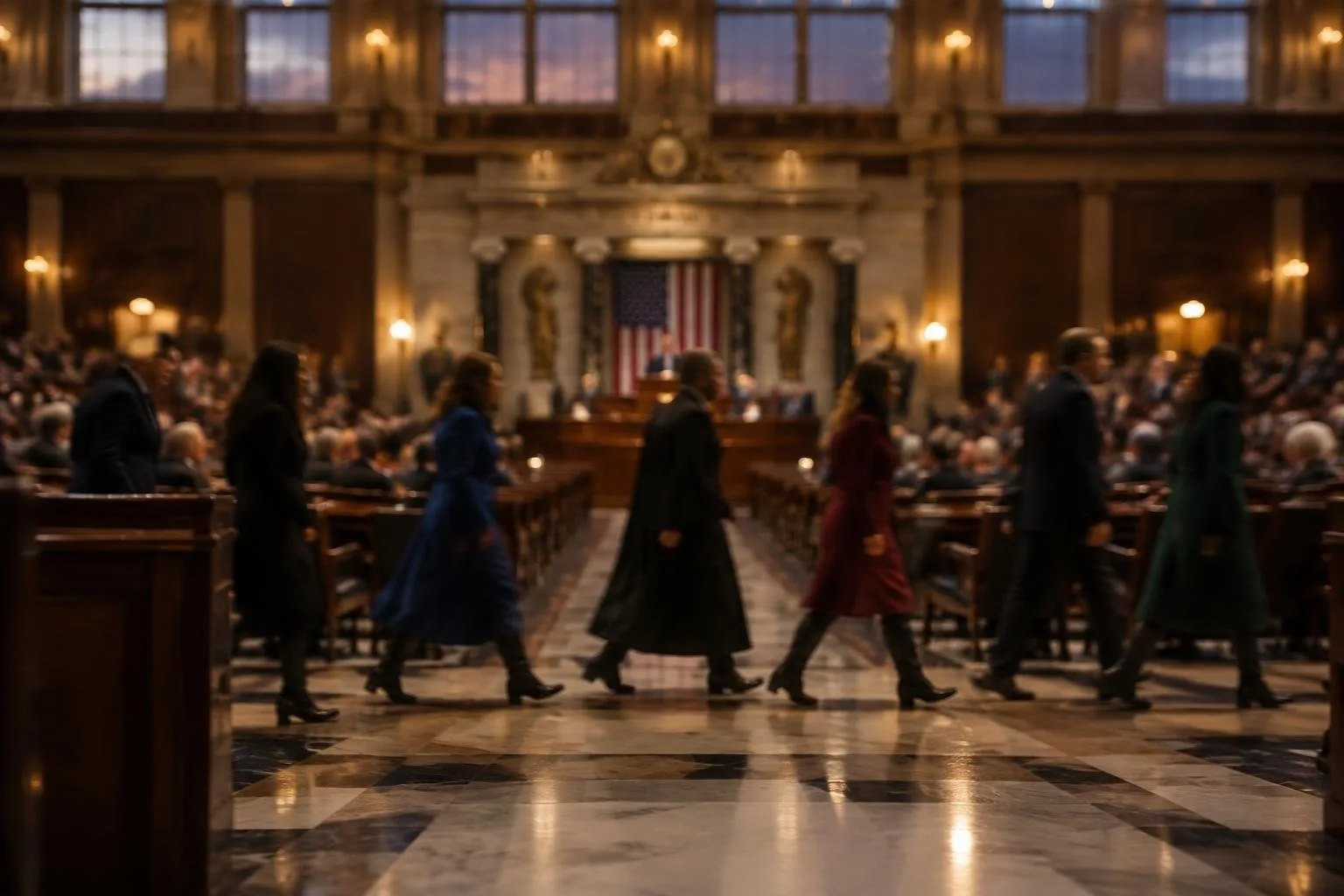
The 2026 midterm cycle produced a political landscape that many analysts had thought impossible just a few years ago. A broad Democratic majority now controls both chambers of Congress, while a string of unprecedented governorship victories has reshaped the executive map of several states. Equally striking, the election delivered record numbers of LGBTQ candidates who not only won but shattered long-standing glass ceilings.
Democratic control of the federal legislature
When the final precincts were tallied, the House and Senate each flipped to the Democrats, delivering the first unified congressional majority since the early 2000s. Kansas elected a Democrat to the Senate for the first time since 1932, and South Carolina returned a Democratic senator after a three-decade hiatus. In Ohio, Amy Acton made history as the state’s first female governor, while Georgia’s Keisha Lance Bottoms became the nation’s first Black female governor, defeating a long-standing Republican incumbent.
In Texas, despite a massive outlay of anti-trans rhetoric, James Talarico secured a Senate seat – the first Democratic win in that state since 1988 – underscoring that voters remained more concerned with everyday issues than with manufactured cultural controversies. The results signal a clear repudiation of the GOP’s strategy of banking on social-issue panic to win votes.
Groundbreaking governorships and historic firsts
Beyond the Capitol Hill surge, the 2026 ballot produced a cascade of first-time milestones. Gina Hinojosa became Texas’s first Latina governor, leveraging a platform that emphasized education and healthcare over the GOP’s anti-trans narratives. In New Mexico, former Interior Secretary Deb Haaland will be the first Native American woman to lead a state, while her colleague Peggy Flanagan secured a Senate seat in Minnesota, marking the first Native American woman elected to that chamber.
These victories weren’t limited to the Southwest. In Michigan, Abdul El-Sayed shattered expectations by becoming the first Muslim U.S. senator, refusing to bend to anti-trans attack ads that tried to link his campaign to “gender-affirming” policies. In Montana, smokejumper Sam Forstag earned a House seat while publicly stating that the government should stay out of personal medical decisions, a stance that resonated with voters wary of intrusive legislation.
LGBTQ representation reaches new heights
The LGBTQ Victory Fund announced that 369 openly queer candidates won office this cycle, a figure that dwarfs previous midterm totals. Notable federal winners include Chris Pappas, the first openly gay man elected to the U.S. Senate from New Hampshire, and JD Ford, Indiana’s inaugural openly gay congressperson. In the House, Jeremy Moss became Michigan’s first openly LGBTQ member, while Marni von Wilpert flipped a California seat for the LGBTQ community.
State legislatures also saw breakthroughs. Bentley Hudgins entered the Georgia General Assembly as the state’s first out trans and nonbinary lawmaker. Allison Montgomery earned the distinction of Alabama’s first transgender legislator, and Jaelynn Scott became the first out Black trans woman elected to a state house in Washington. These wins signal a growing acceptance of diverse gender identities at the ballot box.
Republican anti-trans advertising backfires
Throughout the campaign, the GOP invested nearly $200 million in anti-transgender ads, betting that fear about transgender youth in sports and medical care would eclipse concerns about inflation, healthcare costs, and immigration. Texas alone saw $78 million poured into such messaging, including a high-profile $29 million spot from Elon Musk that warned parents about potential jail time for refusing to support gender-affirming procedures.
Despite the ferocious spending, polling data indicated that only about 12 percent of registered voters regarded transgender issues as a priority. The aggressive media blitz failed to shift outcomes; candidates targeted by these ads, such as James Talarico, still won, and the backlash even produced viral TikTok moments that mocked the fear-mongering. As Erin Reed noted, the strategy resulted in “an earth-shattering loss and a stunning rebuke of anti-transgender politics.”
Ballot measures on gender identity: a mixed picture
While many LGBTQ victories unfolded at the candidate level, several states advanced anti-trans ballot initiatives. Nebraska’s Initiative 442, now part of the state constitution, mandates that all school and private-team sports be divided by biological sex. Arizona’s Proposition 318, which enforces gender-segregated bathrooms and locker rooms, cleared 59 percent of the vote, even as the state rejected a separate anti-Affirmative Action measure.
In Washington, Measure 638—targeting girls’ sports and defining participants by biological sex—gained 57 percent support, buoyed by a $7 million campaign financed largely by hedge-fund billionaire Brian Heywood. Conversely, Missouri’s Amendment 3, which would have embedded a ban on transgender youth care into the state constitution, was defeated after vigorous grassroots opposition, keeping existing statutory restrictions in place but preventing a constitutional lock-in.
Other states displayed more progressive outcomes: Virginia repealed its 2006 ban on same-sex marriage, and Vermont added an equal-protection clause to its constitution, reinforcing statewide LGBTQ rights.
Overall, the 2026 midterms illustrate a dual reality: while the Democratic Party has secured a historic congressional sweep and broken numerous representation barriers, the battle over transgender rights continues at the state level, with both victories and setbacks shaping the next few years of American politics.