
Food and love are frequent companions in contemporary queer literature, and there’s a surprising breadth of novels where meals, kitchens, and flavors play a meaningful role in character development. This selection highlights works that foreground culinary life in different registers: sumptuous restaurant scenes, greasy late-night deliveries, bakery-run community spaces, and even speculative kitchens in dystopian settings. I use queer food fiction as an umbrella term and foodie romance to describe romances where food functions as both setting and catalyst for intimacy. The list below preserves the spirit of an earlier compilation — the original list was published in 2026 — but expands the range with literary and genre-forward picks that demonstrate how food can map identity.
Rather than cataloguing every cookbook-adjacent title or pun-heavy romance, this guide groups books by the ways they use food. Some works treat cuisine as sensual texture, others use kitchens to stage power dynamics, and a few interrogate consumption itself. Across the picks you’ll find celebrated contemporary authors and mid-century classics, YA and adult novels, and entries that straddle speculative and realist modes. Wherever possible I note distinctive hooks: a chef who dominates the room, a delivery job that becomes a coming-of-age crucible, or a donut shop that sparks improbable interstellar romance. These are books that taste like someone you want to sit down with.
The role of food in queer narrative life
Food in fiction often operates as shorthand for memory, ritual, or desire; in queer stories it frequently becomes a means of claiming space and intimacy. When a character cooks, transports, or sells food they are performing labor and expressing care, and those acts reveal social bonds and conflicts. Think of kitchens as stages: a chef manipulating flavors is also shaping how a community tastes identity, while a delivery route can trace the emotional geography of a neighborhood. Several novels on this list—like Family Meal and Land of Milk and Honey—use culinary work to reckon with grief, migration, and scarcity, showing how consumption can be political as well as sensual.
Another recurring motif is the contrast between polished, gourmet settings and the messy, greasy realities of day-to-day eating. Some books luxuriate in Michelin-style detail; others celebrate sticky, unapologetic snacks that stain clothing and hands. These opposing aesthetics allow authors to explore class, nostalgia, and access to comfort. The presence of food can be subtle—background texture in a Chinatown scene—or explicit, as when a character is a celebrity chef whose entire public persona turns on culinary charisma. Across forms and decades, food becomes a language for intimacy and an apparatus for desire.
Books grouped by culinary theme
Culinary travel and sensual delight
Several novels pair queer romance with travel or public-facing culinary careers, offering lush descriptions and appetite-driven plots. Casey McQuiston’s The Pairing combines a European food-and-wine tour with frank sexual chemistry between two women. Akwaeke Emezi’s You Made a Fool of Death with Your Beauty includes a celebrity chef named Alim whose carefully curated menu deepens the novel’s sensual textures. Nina LaCour’s Yerba Buena follows a bartender and a florist whose workplace at a chic Los Angeles restaurant kickstarts their self-discovery, while Ryka Aoki’s Light From Uncommon Stars detonates genre expectations with a donut shop that initiates an otherworldly romance. These titles use travel, fame, and public food spaces to expand desire beyond domestic kitchens.
Messy food, intimate labor, and classic pulp echoes
Other entries celebrate the unglamorous side of eating and the intimate labor of food delivery or small cafes. Jean Kyoung Frazier’s Pizza Girl centers on an eighteen-year-old delivery worker whose life is defined by greasy, memorable orders. Ann Bannon’s pulp classic Beebo Brinker includes an early depiction of a queer pizza delivery job that propels a dramatic affair, complete with one notorious pizza-throwing scene. Malinda Lo’s Last Night at the Telegraph Club renders 1950s Chinatown with appetite-rich details, and Fannie Flagg’s Fried Green Tomatoes at the Whistle-Stop Cafe anchors its community storytelling in southern cooking and cafe lore. These narratives honor the textures and social meanings of everyday food.
Bakeries, competitions, and speculative kitchens
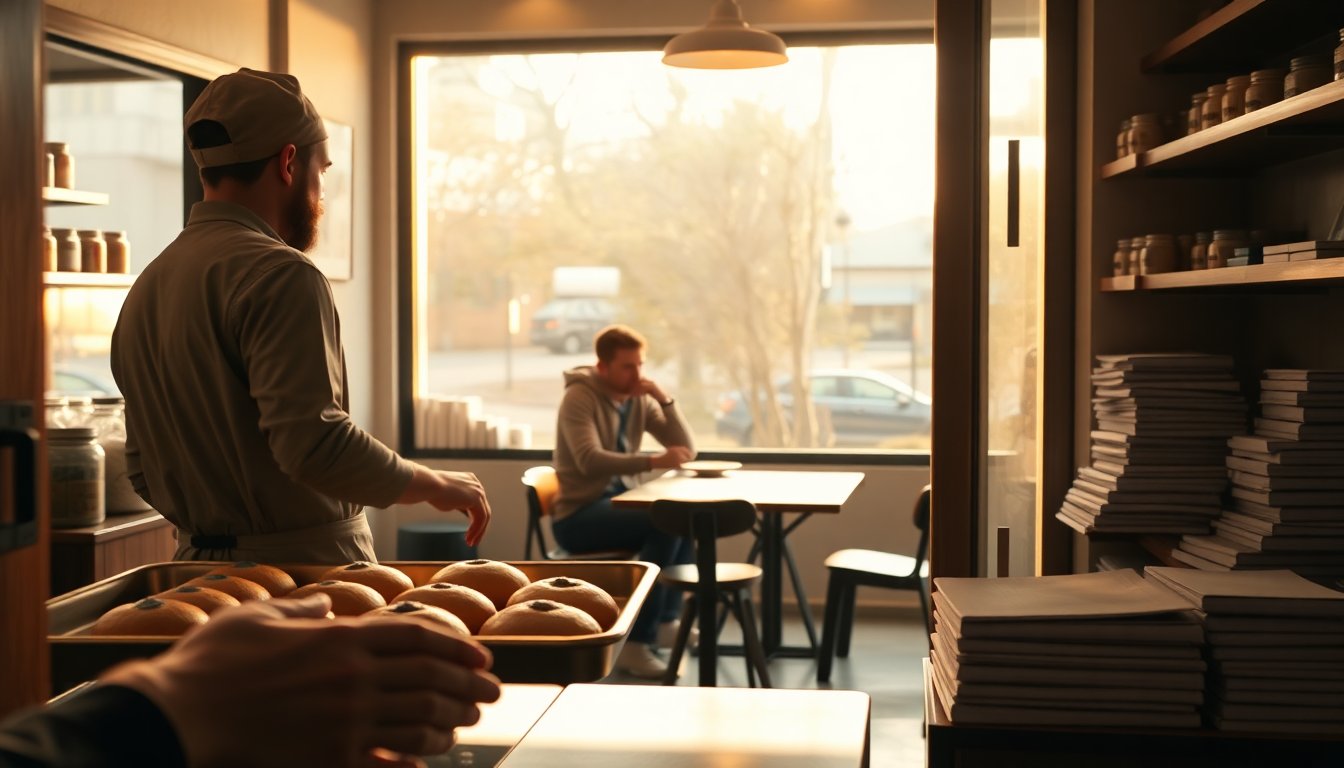
Bakery settings and food competitions provide fertile ground for romance and interpersonal drama. Bryan Washington’s Family Meal returns to Houston’s bakery life to explore grief and memory, while A.R. Capetta’s The Heartbreak Bakery imagines a queer bakery with magical brownies that complicate relationships. YA and romantic comedies like Trinity Nguyen’s A Bánh Mì for Two, Adiba Jaigirdar’s The Dos and Donuts of Love, Lisa Peers’ Love at 350º, Ruby Barrett’s The Romance Recipe, and Susie Dumond’s Queerly Beloved center ovens, rivalry, and community celebrations. Lurking elsewhere are darker or more experimental takes: K-Ming Chang’s Organ Meats foregrounds themes of consumption in visceral prose, Melissa Broder’s Milk Fed examines disordered eating, and C Pam Zhang’s Land of Milk and Honey imagines culinary work amid climate collapse. Finally, thrillers like Swan Huntley’s I Want You More twist the celebrity chef trope into psychological suspense, and Be Steadwell’s Chocolate Chip City offers a magical, musical debut that treats baking as both art and resistance.


