
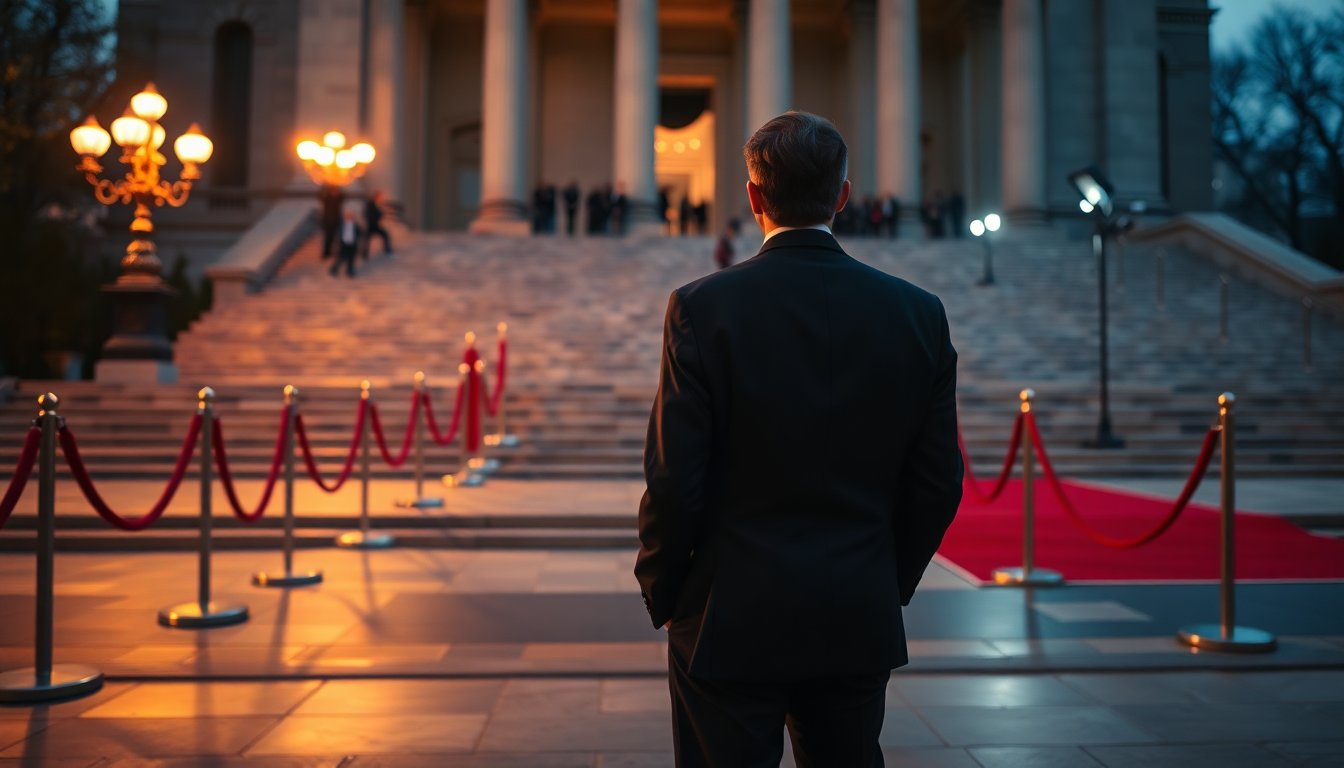
Billy Porter recently confirmed that he will not be at the next Met Gala, explaining that he simply was not invited back after his 2019 appearance. On SiriusXM’s Bevelations podcast he made it clear that the only time he walked the Met steps was the year he was invited by Ryan Murphy, and that subsequent invitations have not been extended. Porter framed his absence matter-of-factly, saying he does not go to events where he feels unwelcome. The remark underscored a confidence he says has developed alongside his career and public profile.
Porter also pointed out that a theme that would seem aligned with his aesthetic – Black dandyism, the subject of the Met’s 2026 focus on tailoring Black style – did not bring him back to the event. He noted this omission directly during the interview, emphasizing that although he is “good” with it, the record should show he was not on the invite list. In presenting his position Porter balanced disappointment with a clear boundary: he values belonging and will not seek validation from spaces that do not extend welcome.
The backstory: a memorable debut and the invitation gap
Porter’s 2019 Met Gala appearance remains one of the most talked-about moments in recent red-carpet history. Wearing a theatrical, gilded ensemble and arriving in dramatic fashion, he created a lasting image for the Camp-themed night. He has reiterated that his invitation that year came through Ryan Murphy, not directly from gala organizers. Since then, despite his continued prominence in entertainment and fashion, he says he has not been invited back. That gap has become part of public conversation about who the Met chooses to recognize and how fashion institutions manage access to cultural figures.
Why the absence matters
The absence of an invite to a high-profile event like the Met Gala raises questions about representation, influence, and the relationship between artists and fashion gatekeepers. For Porter, who has publicly pushed boundaries around gendered dressing and visibility, being left out of themes that intersect with his identity—such as Black dandyism—is especially noteworthy. He frames the issue less as a personal grievance and more as a statement about standards he sets for himself: attending only when he is genuinely welcome rather than seeking approval from an industry he has long critiqued.
Tensions with fashion institutions and public critiques
Porter’s comments come in the context of a history of outspoken critiques aimed at key industry figures. He publicly questioned the decision to use Harry Styles for a Vogue cover that highlighted nonbinary fashion, arguing that the magazine’s editors had overlooked the contributions of those from within the communities that shaped the conversation. That critique extended into a broader charge that outlets sometimes elevate others while marginalizing the very creators who pioneered gender-fluid dress. These interventions strained relations with some within the fashion establishment and, according to some reports, contributed to further distance between him and gala organizers.
Reported fallout and disputed accounts
There have been media reports asserting that Porter’s remarks about Vogue’s leadership led to revoked invitations and diminished standing with certain designers. These accounts point to disagreements over coverage and influence, and they suggest a real cost to publicly challenging long-standing power structures in fashion. Porter has maintained that his critiques are about principle and recognition, not personal attacks, even as conversations about industry decisions and whose stories are amplified continue to circulate in public forums.
Health, perspective and the decision to step back
Beyond professional tensions, Porter has faced serious health challenges in recent years. He disclosed that a severe battle with sepsis in September 2026 led to life-threatening complications that required emergency surgery and a prolonged recovery. He has described the experience as traumatic and transformative, and in March 2026 he publicly reflected on that ordeal and its impact on his priorities. Those events, he said, have clarified what matters: physical recovery, creative recalibration, and conserving energy for projects and communities that feel reciprocal.
Summing up his stance, Porter told listeners he has reached a point in his career where external validation is not necessary for him to feel successful. The combination of past disputes with fashion gatekeepers, selective invitations, and serious health scares has reshaped how he chooses public appearances. For Porter, absence from the Met is not a silence of defeat but an intentional boundary—one that aligns with his artistic integrity, personal well-being, and longstanding advocacy for more equitable recognition in fashion.


