
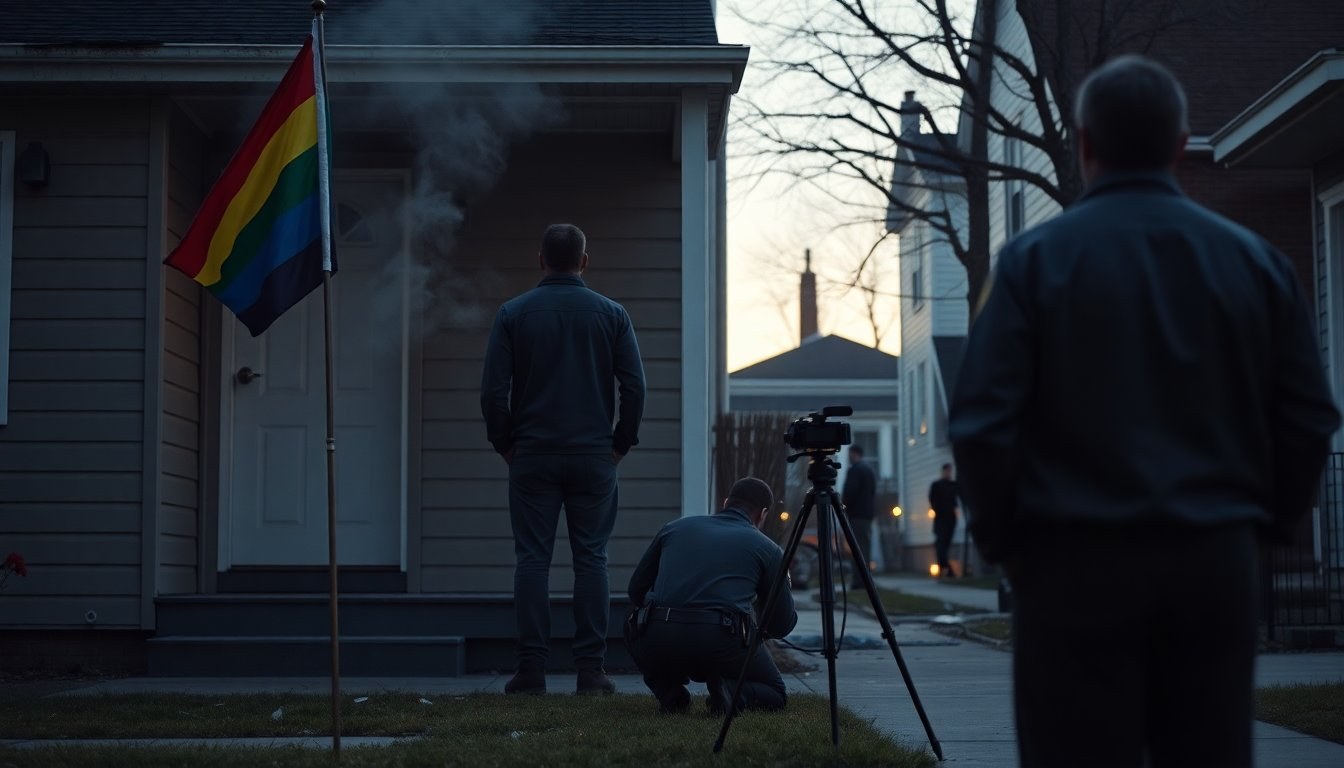
The neighborhood in Lancaster, Pennsylvania, was the scene of a disturbing act when a Pride flag displayed outside the home of Tuc To and Peter Helman was deliberately set alight on April 28. Police in the area have opened an inquiry and are reviewing available evidence as residents react. The couple discovered the damage the following morning and shared surveillance material with local media outlets; that footage has become central to the ongoing investigation. Authorities emphasize the importance of community tips while officers try to identify the person captured on video.
In the video, a hooded individual approaches the flag and uses a lighter to ignite it, leaving the fabric scorched and torn. Because the flag was made of nylon, the flames did not spread to other parts of the house, averting a more serious property fire. The couple lives in a row home, which raises concerns about potential spillover effects to neighboring residences. Ring footage—referred to by the family and shared with local news affiliates—played a key role in documenting the incident and helping law enforcement assess what happened that night.
What the footage reveals
The recorded clip shows the suspect moving along the sidewalk, pausing at the flag, and attempting to ignite it multiple times after it fell. While the person’s face is obscured by a hood, the actions are clear enough to raise alarms across the community. The homeowners posted the clip to social platforms to increase visibility and solicit any additional video that might help. Residents and local journalists have noted the footage to illustrate how targeted symbolic attacks can escalate into dangerous situations, and how surveillance technology like Ring security cameras can serve both as a deterrent and an evidentiary tool.
Safety concerns and the wider risk
Because the property is part of a connected row of houses, the couple and neighbors feared that a larger fire could have affected multiple homes. Public safety concerns contributed to the anxiety surrounding the episode, with the couple pointing out the real human consequences that can arise from such acts. They stressed that these incidents are not abstract: people are behind them, and the potential for harm is tangible. Local officials remind residents that reporting suspicious activity helps investigators and can reduce the risk of similar incidents repeating in the area.
Background and the couple’s response
To and Helman say this attack is not the first time their flags have been tampered with since they moved into the house six years ago—previous incidents included theft and damage. Despite these recurring incidents, they remain determined to display symbols of inclusion. Tuc To, who works as a primary care physician with Penn Medicine Lancaster General Health, regularly provides care to trans patients and offers gender-affirming care. For him, flying the Pride flag is a deliberate statement of support and an invitation for those seeking an affirming space to know they are welcome.
Community support and resilience
The couple reported receiving broad support from neighbors and strangers after the video circulated, describing an outpouring of messages and offers of assistance. They are not deterred from continuing to display their flags; in fact, they have backups ready and plan to raise another banner once the weather permits. Their response underlines a broader community resolve to resist intimidation and to reaffirm public expressions of identity, even when those gestures attract hateful attention.
Ongoing investigation and how to help
Lancaster City Police have acknowledged the video and confirmed the matter is under active review, though officers said the suspect is difficult to make out. Investigators are asking anyone with information, or anyone who captured additional footage that might identify the person involved, to contact Lancaster City Police at 717-735-3300 or submit an anonymous tip through Crimewatch. Law enforcement officials reiterated that community cooperation is vital to resolving incidents that may be motivated by bias or intended to intimidate.
As the investigation continues, the couple’s emphasis remains on visibility and care: they expect to replace the burned flag and continue their advocacy work in the neighborhood and at work. The episode has prompted conversations about safety, civic responsibility, and the role of visible symbols in public life. For now, the damaged flag is a reminder of both the persistence of targeted hostility and the community’s capacity to respond with solidarity and practical support.


