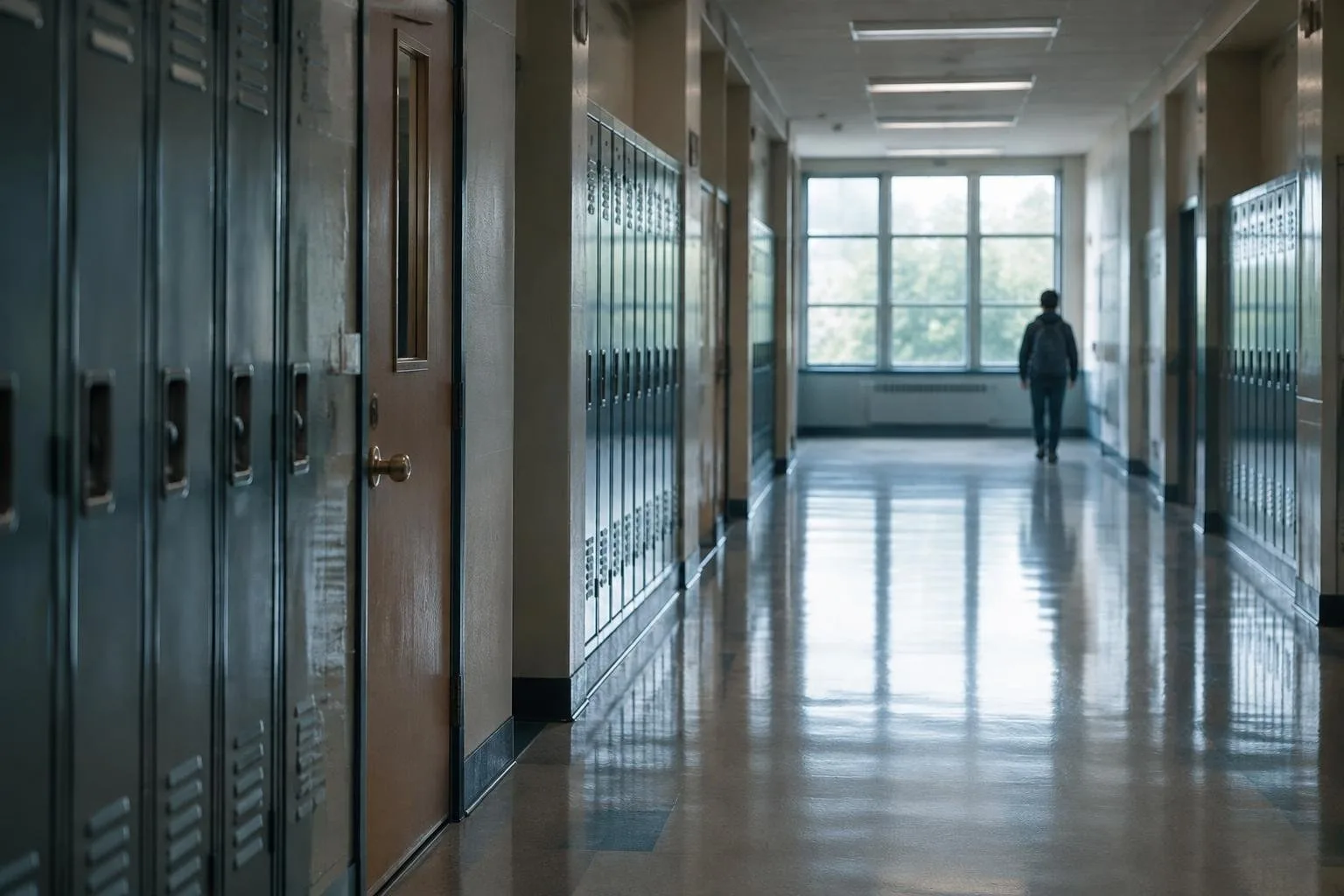
The controversy erupted in Liverpool Central School District, located in Onondaga County, after hundreds of students staged a walkout on Friday morning. The demonstration targeted a newly implemented policy requiring educators to notify parents if students disclosed their sexual orientation or gender identity. In response to the unrest, Superintendent Richard Chapman issued a public clarification aimed at easing tensions, acknowledging that his initial communication had failed to adequately explain the district’s complex legal obligations.
Chapman apologized for the confusion, noting that the original memo was drafted “in legal terms” rather than accessible language for families. He emphasized that a student confiding in a teacher or counselor about their identity does not, by itself, mandate a call to their parents. However, he maintained that contact would be necessary “if a child needs an adjustment to their educational setting.” This distinction attempts to balance the district’s duty to accommodate students with the perceived legal necessity of parental involvement.
Legal Pressures and Board Dynamics
The policy shift stems from interpretations of recent federal court rulings, particularly Mirabelli v. Bonta. During a Wednesday school board meeting, district attorney Kate Reid argued that the Supreme Court’s actions have fundamentally altered the legal landscape for schools. She stated, “What it means is that that is the law of the land,” suggesting that districts can no longer rely on previous guidance that deferred to student wishes regarding parental notification for gender-related accommodations.
Reid drew a sharp line between passive discussion and active facilitation. She explained, “We do not need to necessarily pick up the phone if a child says, ‘I am homosexual’,” but warned that facilitating requests without parental consent could violate constitutional rights. Her stance was supported by a broader federal push: the U.S. Department of Education has launched investigations into five school districts across Pennsylvania, Wisconsin, Colorado, Illinois, and Minnesota over similar policies. Reid cautioned that non-compliance carries significant risk, telling the board, “They’re going to get sued and they’re going to lose, and they’re not going to have insurance.”
School board member Matt Jones expressed disappointment with the current climate, remarking to Reid, “You know that I think this is barbaric, but I think that’s unfair to barbarians.” His comment highlighted the internal friction within the district’s leadership as they navigate conflicting moral and legal pressures.
Civil Liberties Concerns and Future Steps
Despite the superintendent’s clarification, critics argue the underlying policy remains problematic. The New York Civil Liberties Union (NYCLU) released a statement asserting that outing students without consent raises risks of family rejection and discrimination. They contend that LGBTQ+ students should be safe to express themselves at school and come out on their own terms. Legal experts like Derek Black have also questioned whether the district’s interpretation of Mirabelli v. Bonta is fully accurate, noting that the litigation remains ongoing and does not yet establish a comprehensive nationwide rule for every private conversation.
Students who participated in the walkout plan to continue their advocacy by meeting with school officials in the coming weeks. They intend to seek support from state legislators and U.S. Representative John Mannion to challenge the rule. The situation underscores the growing tension between administrative compliance with federal enforcement trends and grassroots demands for student privacy and safety.