
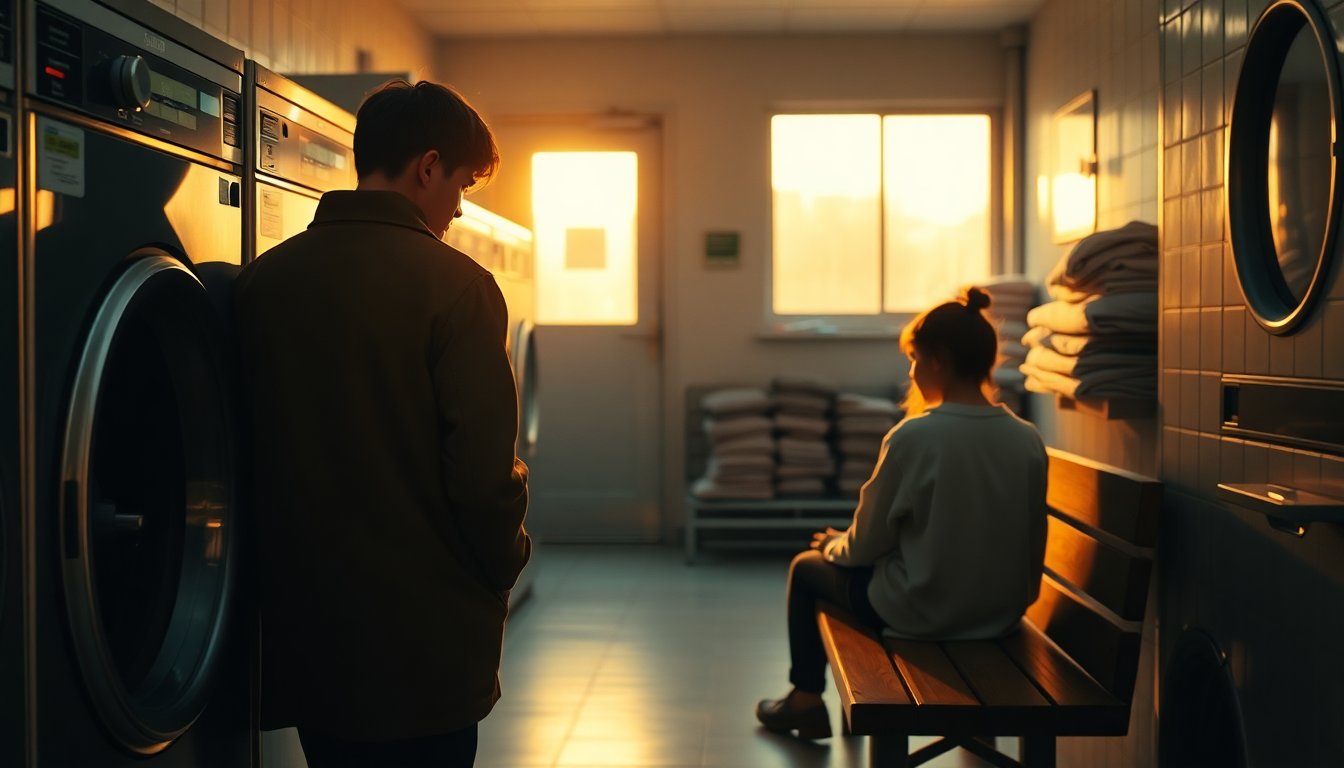
The humble laundromat rarely features on lists of romantic places, yet its revolving machines and transient customers create a unique atmosphere where strangers briefly intersect. In cinema that space can be a crucible for connection: someone folding a shirt, another waiting for a spin cycle, a glance that lingers. The short film Molly leans into this potential, using a coin‑op setting to open a conversation about what closeness can look like when it refuses to be defined only by sex.
Rather than following familiar tropes, Molly deliberately shifts attention toward quieter forms of attachment. The story centers on two young men whose encounter at a laundrette becomes the start of a fragile, intense bond. By focusing on subtle gestures and emotional truth, the film asks viewers to widen their understanding of intimacy and to notice narratives that are often omitted from mainstream portrayals of queer life.
The laundromat as cinematic crossroads
Film history already gives us a model for how mundane public spaces can host radical stories: the 1985 drama My Beautiful Laundrette turned a small business into a site of cultural and romantic risk. Molly picks up that legacy while charting a different course. The laundrette in this new short functions as more than a backdrop; it becomes a meeting point where social roles soften and two characters can negotiate boundaries without the pressure of a private setting. This public intimacy lets filmmakers examine how environment shapes interaction and how chance meetings can evolve into meaningful relationships.
From social realism to personal interiority
While earlier British films used social realism to tackle racism, class, and identity, Molly applies a more intimate lens. The film resists sensationalism and instead explores the emotional labor involved in forming bonds. By removing the expectation that queer stories must be hyper‑sexual or confrontational, the piece highlights how tenderness, conversation, and mutual respect can be powerful narrative engines. These choices place Molly within a broader continuum of British cinema that has alternately interrogated and humanized immigrant and minority experiences.
Characters, themes, and asexuality on screen
At the heart of Molly are Vinnie, played by Hiroki Berrecloth (known from The Hunger Games: The Ballad Of Songbirds & Snakes), and Ryan, played by Frank Kauer (of Hollyoaks). Their initial meet-cute at the laundrette grows into a relationship that must reconcile desire, expectation, and identity. The film makes a deliberate point of foregrounding asexuality—a topic rarely centered in queer narratives—inviting audiences to reconsider how attraction and love can manifest without sexual activity being the defining element.
Expanding the language of connection
By highlighting asexuality and other non-normative modes of relating, Molly expands cinematic vocabulary around intimacy. The film suggests that closeness can be communicated through shared rituals, sustained attention, and emotional candor. It challenges viewers to notice affection that does not conform to mainstream expectations and to validate forms of partnership that are no less real or urgent because they are non-sexual.
A singular creative voice and festival journey
Darius Shu wrote, directed, shot, and edited Molly, making the short a clear expression of his artistic vision. Shu’s previous credits include the horror short His Hands, cinematography on the BAFTA‑nominated documentary Always, Asifa, and music videos for drag performers such as Tia Kofi and The Vivienne. He has framed Molly as an act of reclamation for British East Asian stories, asserting the need for complex, fully human portrayals of East Asian characters in UK cinema.
The cast also features Aldous Ciokajlo‑Squire (Doctor Who), Kaja Chan (Bridgerton), Kadell Herida (EastEnders), Xander Pang, and Tatum Swithenbank. Producer Kaushik Ray, known for the Sundance Grand Jury Prize winner Cactus Pears, supports the project. Molly premiered in March at the 29th Roze Filmdagen—the Netherlands’ long‑running LGBTQ+ festival—and will make its U.K. debut at the British Urban Film Festival on May 7, followed by screenings at Queer East Festival and the Sunderland Shorts Film Festival later in the month.
How to follow the film
Early audiences can view the film’s first trailer, which premiered exclusively via Queerty. For updates, the filmmakers invite viewers to follow the project on Instagram and festival pages. Molly aims to start conversations about representation, romance, and the many faces of love—especially those that unfold away from conventional spotlights.
In reframing a commonplace setting as a stage for nuanced queer storytelling, Molly asks us to listen differently. The film offers a reminder that cinema can broaden our vocabulary for feeling: that a relationship’s depth is not measured solely by bodies or performance but also by attention, empathy, and honesty.


