
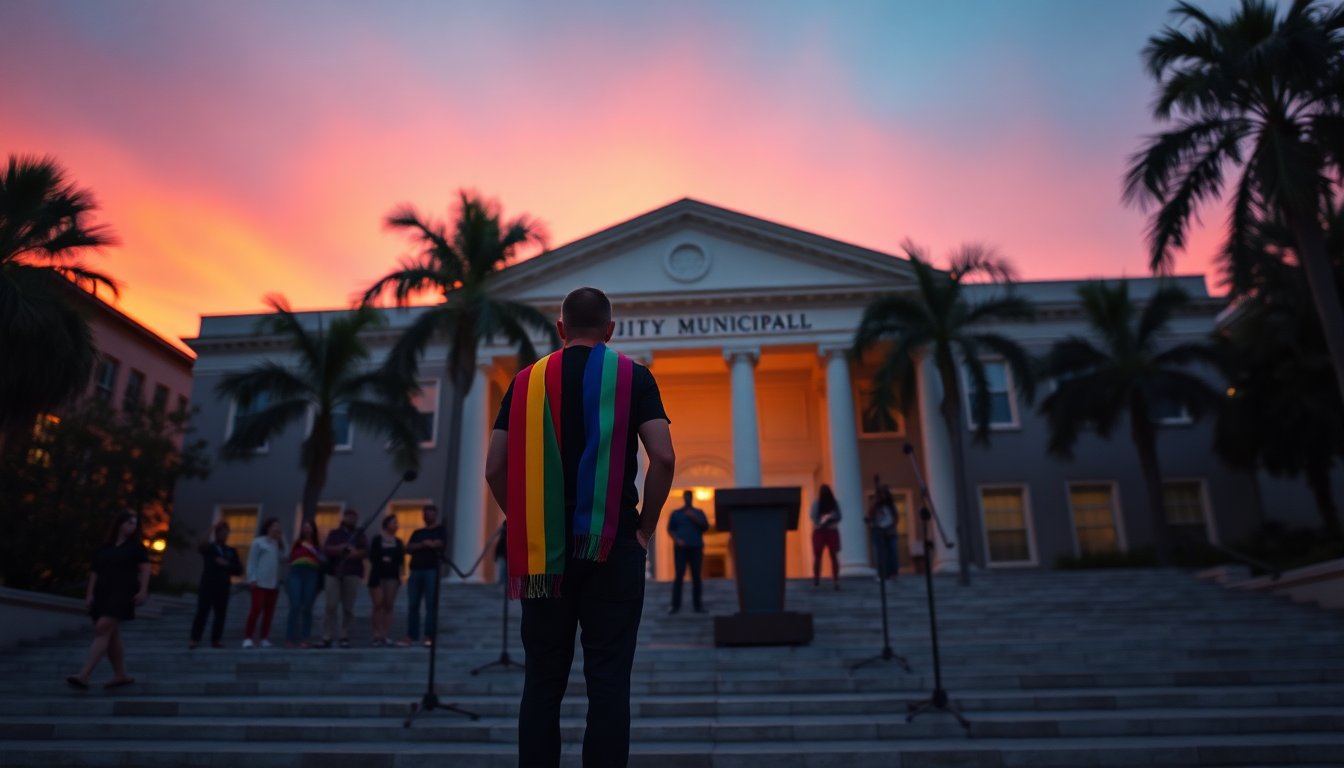
The governor of Florida has signed legislation that prevents counties and cities from running or promoting DEI programs, an action that has immediate implications for municipal practices and for community celebrations. The bill, framed by supporters as a move to ensure merit-based decision making, also establishes a mechanism for private citizens to bring civil suits against a local government they believe violated the new rules. Observers note that the language of the statute is broad and that public officials who implement prohibited activities could face removal from office under certain circumstances, adding a political and legal sting to administrative choices.
Advocacy groups and many local leaders warn that the measure goes further than a simple administrative adjustment, potentially chilling longstanding programs designed to support underrepresented groups. Equality Florida and other organizations say the law could hinder nondiscrimination ordinances, specialized community health initiatives, and recognition of culturally important observances such as Pride and heritage months. Lawmakers did secure a set of exemptions during debate that protect certain memorials and permit processes, but the carve-outs explicitly limit active promotion by governments and leave significant uncertainty about routine local support for festivals and outreach efforts. The statute will take effect on January 1, 2027, creating a countdown for officials and organizers to prepare.
What the law changes and how it defines DEI
At the heart of the new measure is a definition of DEI intended to narrow allowable activities. The text characterizes DEI initiatives as efforts to alter the makeup of a workforce or public programs on the basis of protected characteristics—race, sex, ethnicity, gender identity, or sexual orientation—beyond actions necessary to comply with existing anti-discrimination statutes. In practice, this means that programs explicitly designed to increase representation or to provide targeted services for historically marginalized groups may be curtailed. The bill also specifies that local governments cannot fund or otherwise promote such initiatives, even where prior municipal policy supported them.
Legal tools and potential consequences
The law creates a private right of action, enabling residents to sue municipalities they believe are violating the prohibition, and it outlines pathways for political accountability that could include removal proceedings against local elected officials. Supporters argue these mechanisms are needed to stop what they view as divisive spending, while opponents say the tools will weaponize litigation and politics against inclusive programs. The statute’s ambiguity is a central concern because it may force cities to alter long-standing contracts, training, or community partnerships rather than risk costly legal battles or administrative sanctions.
Reactions from advocates and elected officials
Responses have split sharply along ideological lines. Equality Florida described the law as dangerously vague and pledged to work with local leaders and legal partners to defend programs that support LGBTQ residents and other communities. Its public policy team warned that the measure signals that visible support for diverse populations could carry legal or political risk. By contrast, some Republican lawmakers and local representatives have downplayed the threat to public celebrations. One Miami area official characterized Pride as a cultural festival that will continue, saying the measure does not aim to erase community gatherings but to stop government-funded programs that promote specific demographic outcomes.
Local responses and community resilience
Even before the law takes effect, several municipalities and businesses have doubled down on visibility projects and grassroots efforts that do not rely on direct municipal promotion. Communities have reinstalled murals, organized private festivals, and supported local businesses that celebrate diversity. Organizers and city staff are weighing logistical options: some are proceeding with permits while limiting visible city sponsorship, others are consulting legal counsel about contracts and funding, and some are exploring grassroots fundraising to keep events and services going without official endorsement.
What to watch as implementation unfolds
The coming months will be critical for clarity and for potential legal challenges. Key items to monitor include how state agencies and courts interpret the statutory language, whether municipalities revise procurement and programming rules to avoid liability, and how enforcement is applied in cases brought by private plaintiffs. Advocacy groups have indicated they will challenge attempts to use the law to silence community expression, and local leaders say they will look for creative, legally compliant ways to keep supportive services and celebratory events alive. The outcome will shape not only Pride events in Florida but also broader questions about the role of local governments in nurturing inclusive communities.


