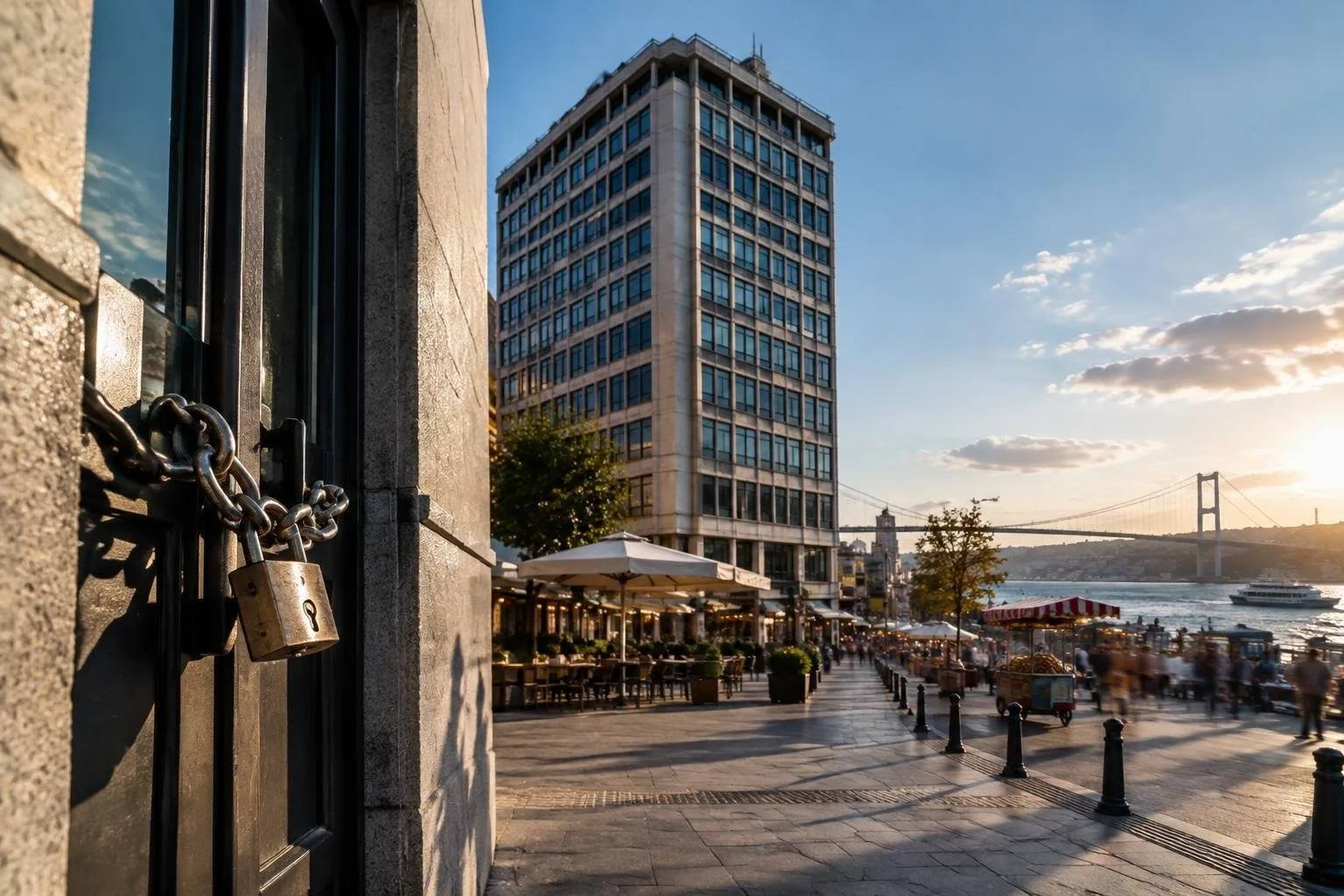
On 12 November 2026 the Istanbul Governor’s Office ordered the closure of the premises used by Lambda Istanbul LGBTI+ Solidarity Association, the nation’s longest-running queer organization. The action was justified by officials as a measure against an “unauthorised social club,” even though the group has been formally registered since 2006 and has operated openly for more than two decades. The move arrives amid a wave of raids, arrests and digital censorship that targets dozens of LGBTQ+ activists across fifteen provinces.
Lambda Istanbul, founded in 1993 after a modest attempt to organise the city’s first Pride march, opened its office in 2002 and later became a legally recognised association. In a press release the group rejected the authorities’ label, insisting that its activities have always complied with official records and transparency requirements. The association warned that the seal-off is intended to “isolate LGBTI+ individuals, deprive them of their living spaces, and restrict their freedom to organise,” echoing concerns raised by other civil-society bodies.
Parallel legal actions against other queer organisations
Within 24 hours of Lambda Istanbul’s closure, the Istanbul Chief Public Prosecutor’s Office filed an indictment seeking the dissolution of Hevi LGBTI+. The indictment also targeted five founding members on alleged violations of the law governing associations. International observers described the accusations as fabricated attempts to silence advocacy. In a similar vein, the Ankara chief prosecutor ordered the detention of seven board members of Kaos GL, one of Turkey’s most visible LGBTQ+ NGOs, leading to a total of 21 arrests linked to that investigation.
Scale of the crackdown
Data released by local monitors indicates that at least 162 people have been detained since the operation began in early September, with more than 80 still awaiting trial. The majority of those charged are trans women, accused of “obscenity” or “assisting prostitution”, charges that human-rights groups deem disproportionate. In addition to physical arrests, the government has blocked access to the websites of several queer organisations, including Lambda Istanbul, Muamma LGBTI+, Velvele, and the news outlet T24, branding their content as “LGBT propaganda.”
Social-media platforms have not been spared. X (formerly Twitter) has removed accounts belonging to Amnesty International Turkey, the left-leaning newspaper Evrensel, and the Psychiatric Association of Turkey, among others. The block extended to university-based LGBTQ+ groups and to the personal account of Alexey Rûyan Aydın, a trans activist who died earlier in the year. These digital suppressions have effectively silenced a large portion of the community’s online communication channels.
Political backdrop and rhetoric
The crackdown aligns with President Recep Tayyip Erdoğan’s proclamation of a “Decade of the Family” beginning in 2026, during which the administration has framed LGBTQ+ identities as threats to traditional values. The “My Family is Safe” operation, launched in September, has been portrayed by officials as a defence of children and families, while critics argue it is a pretext for broader repression of dissent. Since 2015, Istanbul’s governor has repeatedly banned the annual Pride march, and smaller civic initiatives have faced arrests and prosecutions, illustrating a sustained pattern of anti-LGBTQ+ policies.
International human-rights organisations have called for the immediate release of detained activists and the withdrawal of all cases against queer groups. A senior advocacy officer from the International Lesbian and Gay Alliance-Europe described the accusations as “fabricated” and urged governments and civil-society actors that value democracy to condemn the campaign. Despite the lack of explicit criminalisation of homosexuality in Turkey, the current environment severely curtails the ability of LGBTQ+ people to assemble, advocate, and access essential services.
Impact on civil society and future outlook
Beyond the immediate legal battles, the closure of Lambda Istanbul threatens the broader ecosystem of support for LGBTQ+ individuals, including HIV-AIDS services provided by groups such as the Sexual Education, Treatment and Research Association (Cetad). The loss of physical meeting spaces, combined with the digital blackout, hampers community organising, mental-health outreach and the collection of data needed for inclusive policy making. As the nation prepares to host the COP31 climate summit, the stark contrast between the promised “just transition” and the reality of state-sanctioned discrimination underscores the difficulty of achieving truly inclusive climate action.