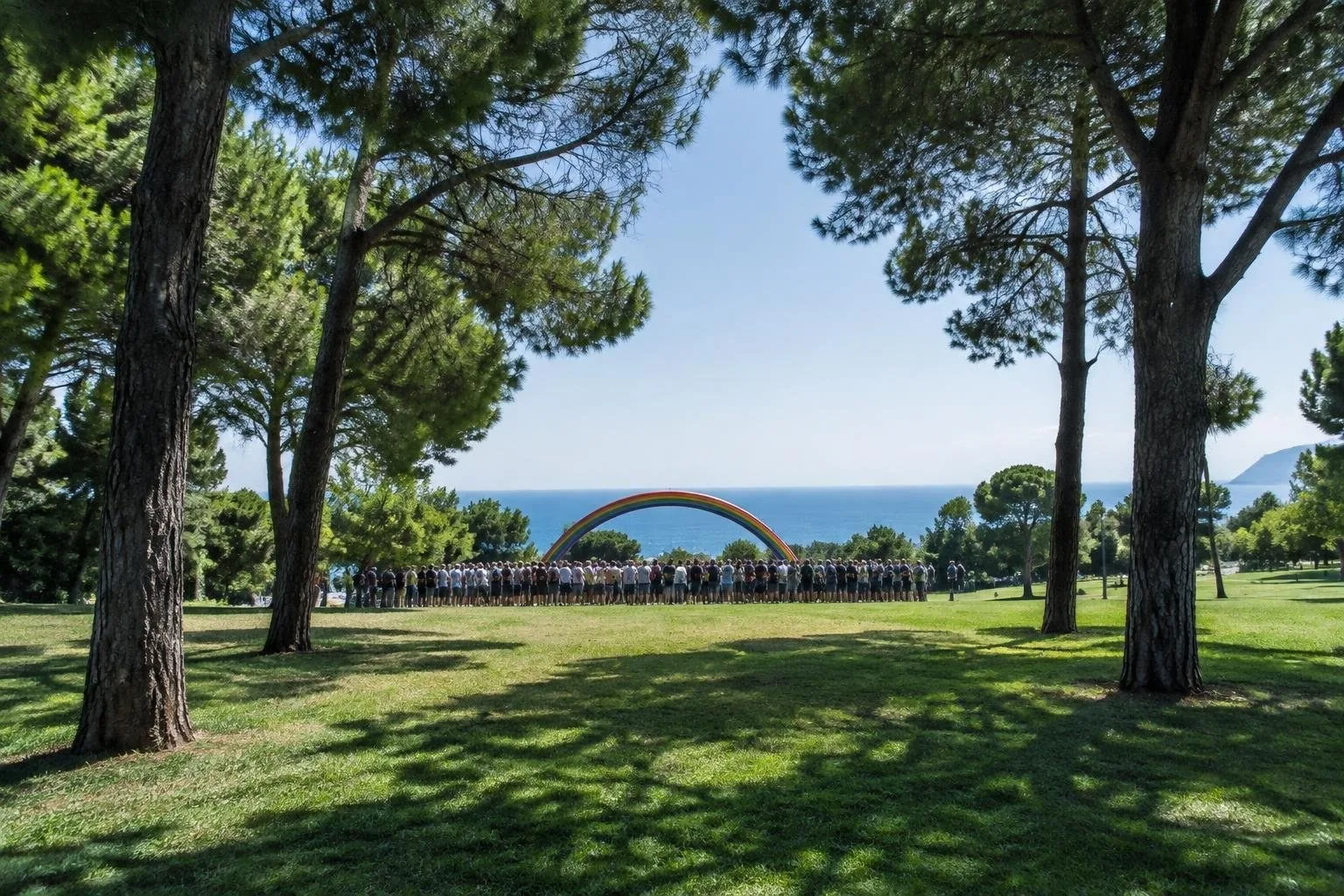
On a sweltering Saturday in Antalya, the city hosting the United Nations climate summit, a mixed crowd of climate campaigners and LGBTQ defenders gathered in Aydin Kanza Park. The gathering was not a spontaneous flash mob; it was a carefully orchestrated civil-society march that placed the most vulnerable Turkish activists under the literal protection of thousands of international demonstrators.
State-led crackdown on queer organising
Since September, the Turkish government has intensified a campaign it labels “My Family Is Safe.” Police raids have swept through NGOs, HIV-support centres, nightclubs and the offices of LGBT groups across five cities. Human Rights Watch documented more than one hundred arrests, including at least twenty-four activists and senior members of queer organisations. Prosecutors have moved to dissolve three separate associations within two months, most recently the Istanbul-based Social Policy, Gender Identity and Sexual Orientation Studies Association (SPoD). The indictment accuses the group of operating “outside its bylaws” and of fostering “division within the state,” demanding prison terms of one to three years for four of its members.
The legal offensive fits a broader narrative promoted by President Recep Tayyip Erdoğan, who has declared 2025 the “Year of the Family” and designated 2026-2035 as the “Decade of Family and Population.” Critics argue that the rhetoric disguises an effort to criminalise public expressions of queer identity and silence civil-society voices that challenge traditionalist policies.
Protective cordon at the climate march
When the climate march began, Turkish police had erected steel barriers along the route, frisked participants twice and inspected every bag entering the park. Security officers photographed slogans, recorded passport numbers and reiterated that “all attendees must present identification.” Within this tightly controlled environment, international climate groups formed a human shield around the LGBTQ participants. The cordon ensured that rainbow flags could be raised without immediate police interference.
Twenty-year-old activist Őzgür carried a rainbow banner draped over her shoulders and described the act as “dangerous” but made possible by the presence of foreign journalists. She likened daily life in Turkey to “living in a prison,” adding that the international spotlight offers a rare window of safety. Another demonstrator, known only as Beren, expressed excitement at waving the flag while mourning a transgender friend who remains detained.
Solidarity from the climate movement
Friends of the Earth England, Wales and Northern Ireland chief executive Asad Rehman noted that organisers had pre-planned the inclusion of queer activists, securing extra flags and ensuring media coverage before the march proceeded. He emphasized that “the eyes of the international media are here,” a factor that, in the eyes of many Turkish activists, tempers the usual heavy-handed police response.
Environmental participants added colour and spectacle to the protest: trombone players, stilt-walkers, a polar-bear costume shedding sweat under a muggy rainstorm, and a gold-plated bronze statue depicting a miniature figure carrying a naked Donald Trump to symbolise wealth-driven exploitation. Greenpeace volunteer Ufuk Anıl explained that his polar-bear suit carried a dual message: rising global temperatures and the urgency of keeping the 1.5°C target alive.
Local climate advocates, such as Özlem Katısöz of the Climate Action Network Turkey, highlighted that the march provided a platform to link ecological defence with broader human-rights battles. She stressed that villages, forests and marginalised communities depend on international solidarity to withstand state-backed development projects.
Legal battle continues amid protest
While the march unfolded, the Istanbul 27th Criminal Court of First Instance scheduled a hearing for November 18 to consider the dissolution request against SPoD. The association’s statement reiterated that “organising is not a crime; it is a right,” and called on journalists, unions and other rights groups to attend the hearing. The case underscores the intersecting pressures faced by civil-society actors: environmental campaigning, queer advocacy and the threat of criminal prosecution.
Across the park, activists from other nations used the moment to raise issues from Indonesia’s protracted forest fires to the broader lack of progress at COP31’s midway point. Their chants, banners and artistic installations reminded the global audience that climate justice cannot be separated from the fight for equal rights.