
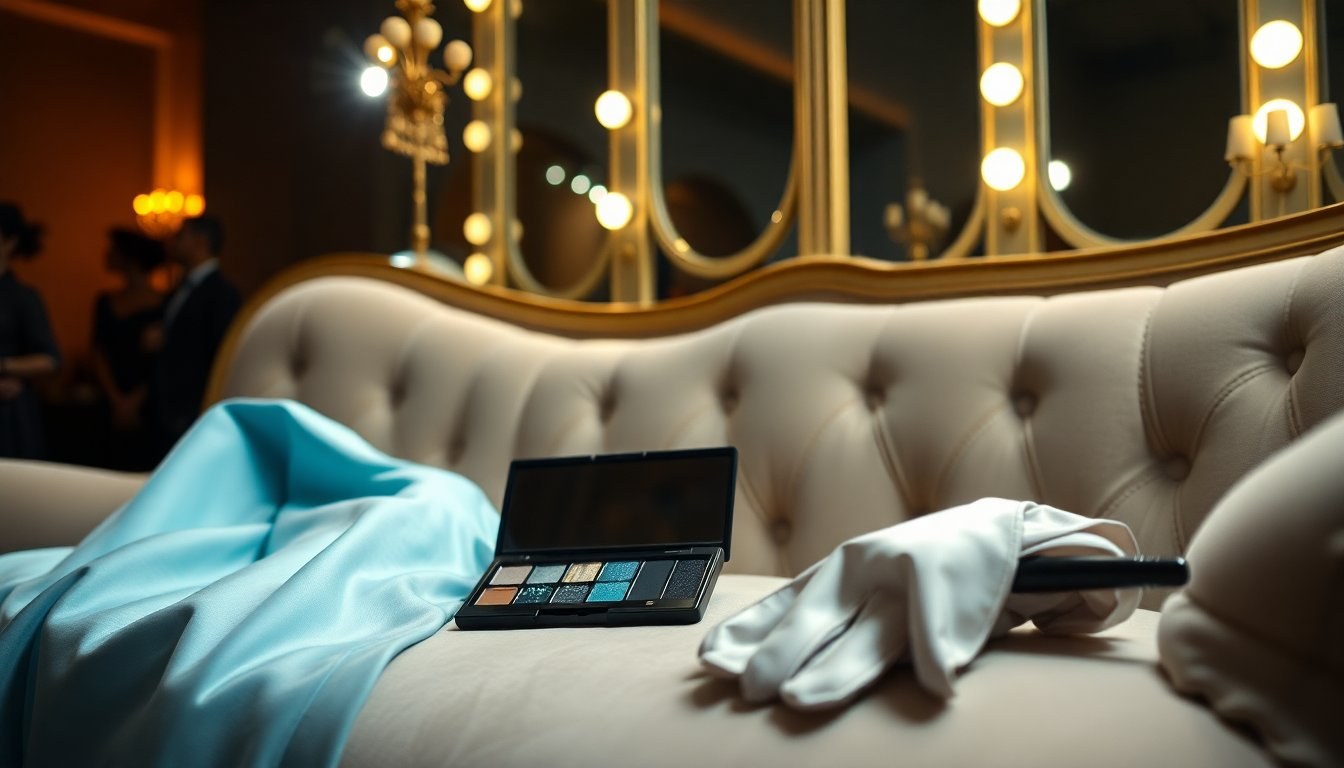
The 2026 Met Gala was a high-profile platform that pushed many attendees to experiment beyond traditional red-carpet norms. Among the newcomers commanding attention was actor Hudson Williams, whose entrance combined a revealing powder blue Balenciaga look with an intentionally asymmetrical makeup design. What became headline material was not only his outfit or the momentary reunion with co-star Connor Storrie, but a deliberately divided eye treatment that some praised as daring and others dismissed as messy.
That split reaction spilled across social feeds: some admirers remade the design, while detractors left blunt critiques beneath videos and images. The grooming artist who crafted Williams’ appearance, Aika Flores, intervened publicly to remind followers that creative risks attract strong opinions and to ask for basic courtesy. The episode offers a snapshot of how the modern celebrity beauty moment can become both a cultural conversation and a personal flashpoint.
The look explained: contrasts, references and technique
Williams’ makeup juxtaposed two distinct treatments: one eye was coated in an iridescent blue shade finished with a sharp wing, while the opposite eye wore matte red with intentionally smudged black liner extending toward the temple and ear. This binary approach was presented as a visual shorthand: the blue side representing precision and poise, the red side conveying chaos and freedom. The team cited inspiration from Darren Aronofsky’s film Black Swan, using color and texture to suggest opposing character traits within a single face. The result read as theatrical and purposefully uneven rather than accidental.
How the design fit the theme
At the core of the choice was the Met’s 2026 theme, rendered by some as Fashion Is Art. The makeup functioned as a wearable painting — a small-scale performance anchored to costume. In that sense, the look aligned with the event’s invitation to treat the body and face as components of an artistic tableau. Whether viewers found the execution successful depended on their tolerance for disruption: to supporters it was experimental craft; to critics it was a step too far from conventional grooming.
Broader trends: men, makeup and what the Met encouraged
Williams’ decision was part of a wider moment where male attendees used eye makeup to amplify outfit storytelling. Some peers opted for understated color that complemented tailoring, while others leaned into theatricality. Examples ranged from muted, lip-to-eye color play that maintained classic silhouettes to full-on smoky or accented eyeliner that reframed masculinity as stylistic rather than strictly conservative. Industry voices noted that the key to successful looks was control — a lived-in finish that reads intentional rather than overworked.
Groomers’ perspective and technique
Makeup professionals observing the night emphasized restraint and texture. A common tip was to use eyeliner with purpose and to favor a slightly imperfect, lived-in finish that lends personality without overshadowing the overall outfit. These ideas mirrored what many teams attempted on the red carpet: balancing boldness with polish so that the eye makeup reads as an extension of a costume narrative, not a disconnected flourish.
Response, online debate and the stakes behind the event
Reaction to Williams’ appearance was polarized. Fans recreated the dual-eye look enthusiastically, while others left blunt comments about him appearing “messy” in a way that felt dismissive of the creative intent. In response, Aika Flores used social media to acknowledge feedback, defend the value of risk-taking, and ask audiences to remember the human beings behind the craft. She signaled a temporary step back from platforms after urging civility, which illustrates how public scrutiny affects collaborators as much as the talent on the carpet.
The Met Gala itself continues to be both a cultural showcase and a major fundraiser: the 2026 edition reported significant donations and generated headlines beyond fashion, including conversations about honorary chairs and philanthropic gifts. That wider context underscores why attendees often treat their looks as statements — they are operating on a stage where art, commerce and public debate intersect in real time.
Whatever one’s take on Williams’ makeup, the episode highlights how the Met Gala remains a testing ground for the boundaries between costume, beauty and identity. Bold choices will keep provoking strong responses, and for artists and performers the payoff is visibility and conversation — even when that conversation is sharply divided.


