
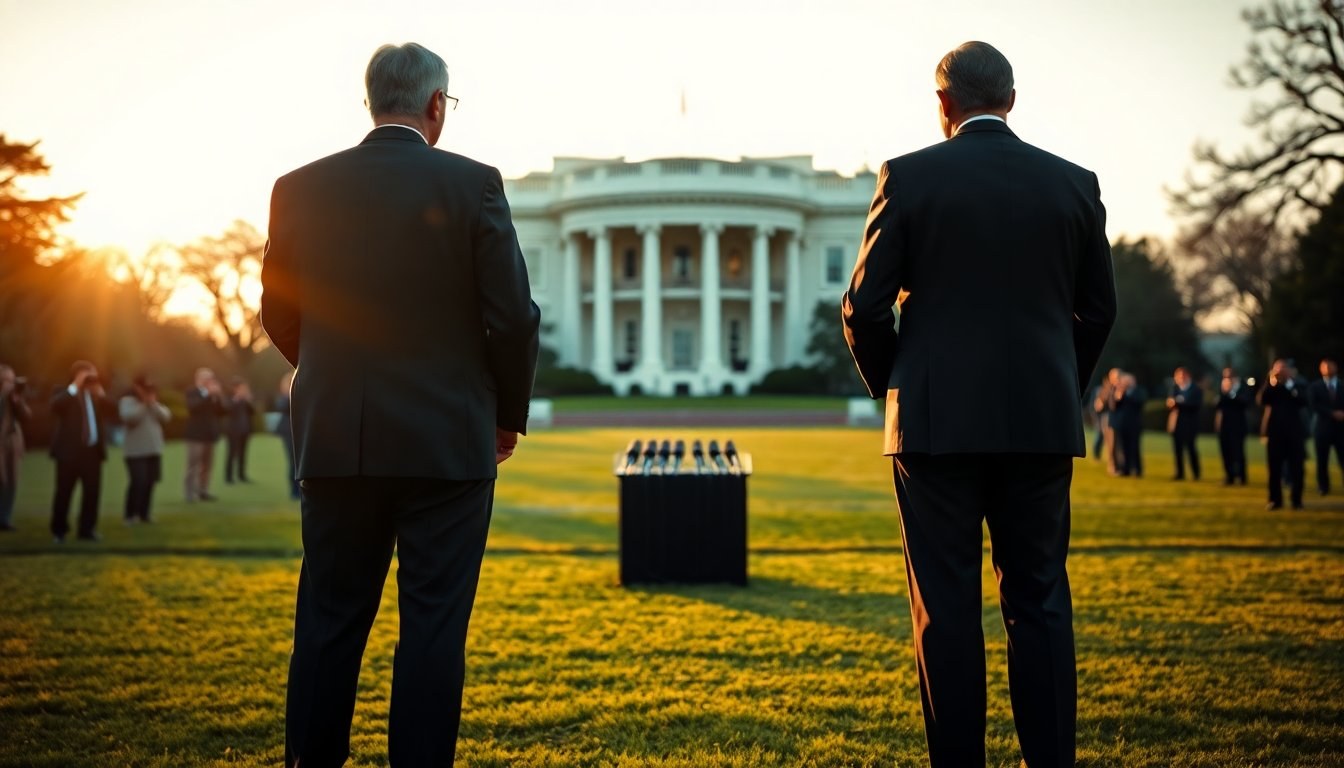
The official social media account of the White House posted a photograph showing President Donald Trump and King Charles III together on the South Lawn, accompanied by the caption “TWO KINGS” with a crown emoji. What was likely intended as a casual, viral moment quickly turned into a political flashpoint because the monarch had just used his platform to praise democratic safeguards. The juxtaposition of an informal caption with a formal speech about institutional limits created an immediate clash between tone and substance.
That same day, the monarch delivered a notable address to legislators, applauding the deep ties between the United Kingdom and the United States and emphasizing shared democratic traditions. In remarks that resonated with members of both chambers, he recalled historic documents such as the Magna Carta and the 1689 Declaration of Rights as antecedents to American constitutional protections. By highlighting these sources, the king underscored the principle that no leader is above the law, a point that contrasted sharply with the White House social post.
What the image and caption conveyed
The photograph featured two leaders exchanging a cordial moment, but the caption turned that image into a rhetorical statement. Social media teams often aim for punchy copy to increase engagement, yet the choice to label the picture “TWO KINGS” carried an unintended symbolic weight. For many observers, the phrase tapped into ongoing debates about executive conduct and the limits of presidential authority. The post therefore operated on two levels: as a lighthearted snapshot meant to humanize a presidency, and as an inadvertent provocation in a charged political environment.
Why the king’s remarks mattered
In his address the monarch emphasized the historical lineage of constitutional ideas and their modern-day relevance. He referenced how documents like the Declaration of Rights of 1689 influenced the American Bill of Rights, and he noted that the Magna Carta is repeatedly cited in U.S. Supreme Court cases. By doing so, he reiterated the core democratic idea of checks and balances—the arrangement by which power is divided and supervised to prevent overreach. The applause and standing ovation from lawmakers reflected how that theme resonated across party lines.
Reactions and public response
Responses to the tweet were swift and varied. Many critics mocked the caption, posting memes and quips that framed the moment as tone-deaf. Some commentators pointed out the historical irony: the United States once fought to avoid monarchical rule, so calling a sitting president a “king” felt provocative to some. Conversely, conservative media defenders argued the caption was playful and deliberately provocative toward critics. The exchange illuminated how a single sentence on a government account can inflame both cultural and constitutional conversations.
Public and media responses
On social platforms, users from across the spectrum turned the image into fodder for commentary. Critics compared the caption to a misstep given the king’s emphasis on institutional limits, while supporters framed it as rhetorical showmanship. Journalists highlighted the contrast between the monarch’s sober remarks about the role of historic legal texts and the brisk informality of a social post. The divergence in readings revealed how modern political communication often collides with deeper civic concerns about authority, legitimacy, and symbolism.
Political implications
Beyond jokes and GIFs, the episode reopened conversations about public expectations for executive behavior. The king’s invocation of the Magna Carta and related documents served as a reminder that democratic systems rely on procedures and distributed power. Some observers linked the image caption to recent demonstrations labeled “No Kings”, which criticized perceived authoritarian tendencies. Others saw the post as part of a broader strategy in political messaging: to seize cultural moments and shape narratives, even when that approach risks alienating segments of the public.
In sum, the incident is a case study in why context matters in official communications. A single phrase on a government platform can amplify existing debates about governance and accountability. Whether viewed as a tone-deaf gaffe or a deliberate provocation, the White House post demonstrated how symbolic language interacts with substantive arguments about the limits of power and the role of tradition in shaping modern democracies.


