
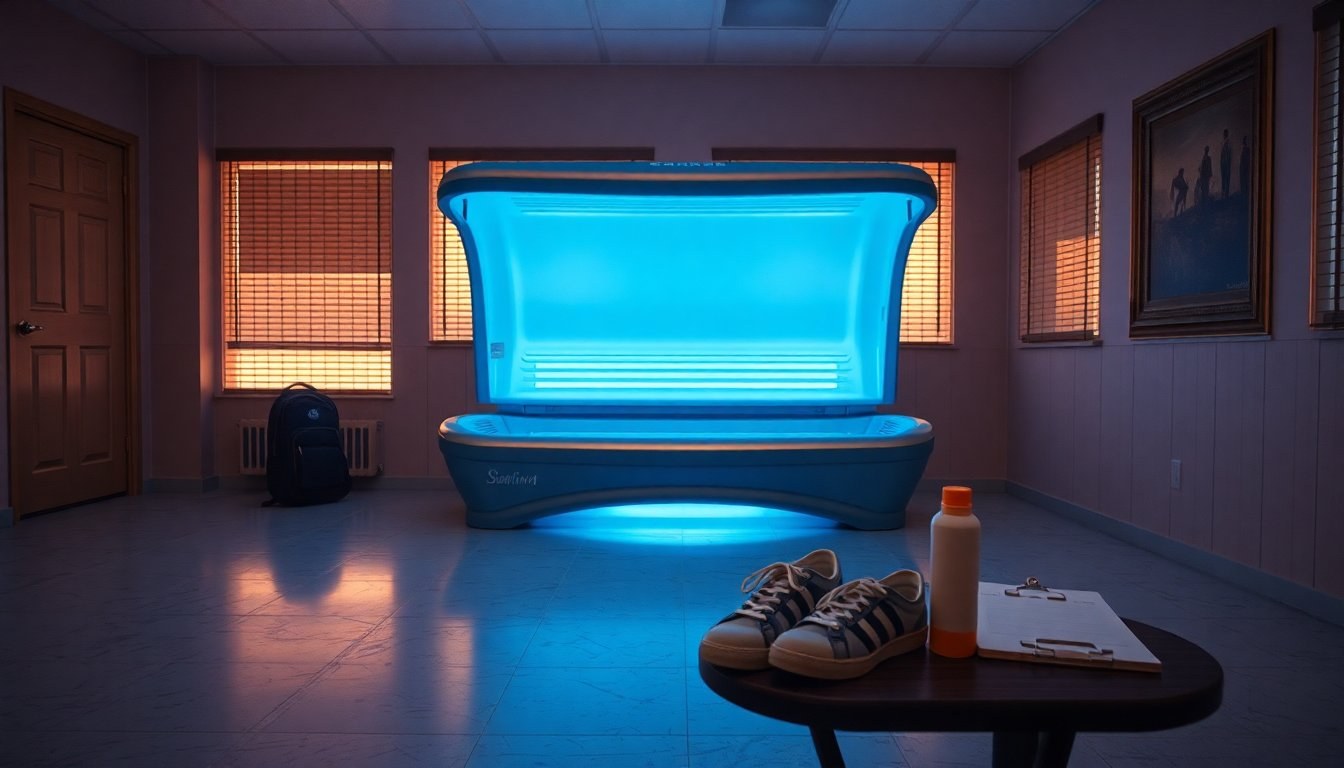
The federal government’s move to step back from a proposed restriction on underage access to indoor tanning has reopened a tense conversation about risk, science and politics. Health and Human Services Secretary Robert F. Kennedy Jr. withdrew a long-standing draft rule on March 16 that would have prohibited minors from using devices that emit concentrated ultraviolet radiation. The reversal has been framed by critics as a win for the tanning industry and by supporters as a reassessment of regulatory strategy, but it has also raised alarms among clinicians who track skin cancer trends.
At the same time, this episode sits alongside broader disputes over medical interventions and childhood care — from debates about gender-affirming care to parental refusals of routine newborn treatments such as vitamin K. These fights share a familiar pattern: confident-sounding challenges to established guidance, the spread of simplified studies or talking points online, and political movements that prize skepticism of institutions over technical expertise. The tanning decision became another example of how policy, persuasion and health outcomes intersect.
What was withdrawn and why it matters
The proposed rule targeted indoor tanning facilities that use lamps delivering intense doses of UVA and UVB radiation. Regulators intended the measure to protect young people by limiting access and requiring informed-consent warnings about cancer risk and premature aging. On March 16, however, the draft rule was formally withdrawn so officials could reconsider the approach after receiving public comments expressing scientific and logistical concerns. Dermatologists and cancer researchers pushed back, citing decades of evidence that early ultraviolet exposure contributes disproportionately to lifetime skin cancer risk.
What the science says about indoor tanning and young people
Medical authorities have repeatedly warned that artificial tanning devices are dangerous. Tanning lamps mimic the sun’s ultraviolet spectrum but often amplify certain wavelengths: the UVA component in beds can be many times higher than levels found in natural environments while UVB produces burns and DNA damage. Organizations such as the World Health Organization classify UV-emitting tanning devices as a Group 1 carcinogen, the same category as tobacco and asbestos. Research indicates that using tanning devices before age 35 substantially increases melanoma risk, and clinicians report treating young adults for aggressive skin cancers that reflect earlier exposure.
Why early exposure matters
Biologically, the skin accumulates damage over time: each sunburn or tanning session causes cellular changes that can later become malignant. Studies show a sharp rise in melanoma diagnoses and link earlier initiation of indoor tanning with higher lifetime risk. Warnings also highlight that there is no protective adaptation from repeated UV exposure — the popular notion of a solar callus or built-up tolerance is unsupported by evidence. From a public-health perspective, restricting youth access is seen by many specialists as a straightforward prevention strategy; states that have limited underage tanning report stronger protective frameworks than jurisdictions without such rules.
Politics, misinformation and public trust
The tanning debate is not purely clinical; it is entangled with a broader cultural moment in which skepticism about institutions fuels health choices. Movements that question established medical advice can elevate anecdotes, cherry-picked studies or charismatic commentators who promise simple fixes. This dynamic has appeared in campaigns against vaccines, in objections to mainstream mental-health treatments, and in recent challenges to gender-affirming care. For supporters of those movements, reversing a federal rule feels like validation of mistrust in formal expertise. For clinicians, it represents a setback in efforts to translate evidence into protective policy.
Whether on the subject of tanning beds or other health topics, the core tension remains the same: evaluating a large, complex body of research takes time, expertise and institutions that synthesize findings. Shortcuts — amplifying a single study or trusting a viral claim — can have real-world consequences when they shape behavior or regulation. The current situation underscores the need for clearer communication from scientists, consistent public-health protections for young people, and more robust public conversations about how to balance individual freedom with population-level safety.


