
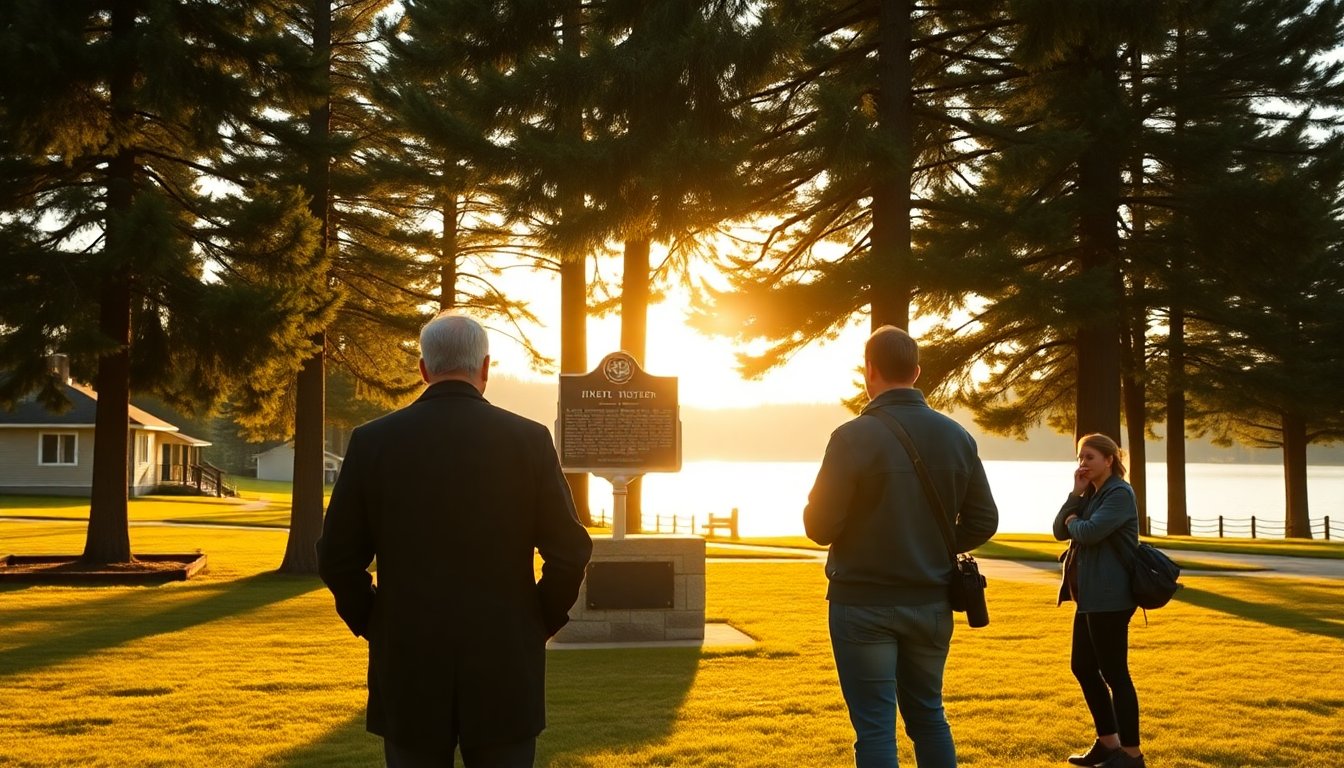
The small town of Pine City, Minnesota, is preparing to place a new historic marker where a local Pride movement began. The plaque will be dedicated on May 28 in Voyageur Park, the same green space where organizers staged their first official gathering in 2005. For residents and activists involved in the effort, the marker is more than a sign: it is a statement about visibility, memory, and the right of rural communities to claim their place in broader LGBTQ+ history.
Organizers describe the sign as recognition of rural Pride—a term used to indicate Pride initiatives outside large urban centers. The group behind the commemoration, East Central Minnesota Pride, began when a local support group for gay, bisexual and questioning men expanded into public events and community-building activities. Placing the monument where that effort started links a physical location to decades of organizing and social support that helped keep many residents in town rather than feeling forced to move to a city to belong.
Background and origin
Pine City sits roughly one hour north of the Minneapolis metro area and had a population near 3,100 people according to the 2026 census. In 2005, members of a local support group launched what they and others call one of the nation’s earliest examples of organized rural Pride. Their first public celebration in Voyageur Park is now the site chosen for the marker, a concrete reminder that LGBTQ+ community making did not begin exclusively in large cities. Local leaders see the installation as an invitation to future generations to stay and build community where they live.
Approval, funding and recordkeeping
Funding and municipal approval
Securing municipal backing and financial resources was part of the project’s arc. The city council in Pine City approved the marker after a closely divided vote that required a tiebreaker from Mayor Kent Bombard, who is married to Aaron Bombard, the president of East Central Minnesota Pride. Funding for the project was estimated at about $7,000 as of 2026, with contributions coming from the Minnesota Historical Society and a state fund that supports local history, arts and culture. Supporters say that combination of local endorsement and public funding underscores the marker’s community legitimacy.
Historic records and visibility
Keeping track of such monuments is not straightforward. As Allison Ortiz, communications lead at the Minnesota Historical Society, has noted, there is no universal definition of a historic marker and no single statewide registry that captures every plaque or sign. The Historic Marker Database includes some related entries—such as a sign placed at Loring Park in Minneapolis in 2010 tied to Twin Cities Pride—but does not list all Minnesota Historical Society markers that touch on LGBTQ+ themes. Advocates view the Pine City marker as the first LGBTQ+-focused entry on the state’s official list, filling a gap in how rural stories are preserved.
Community impact and legacy
Since those early years, East Central Minnesota Pride has grown beyond a single annual event. The organization runs social gatherings for LGBTQ+ seniors, coordinates interfaith Pride services, and partners with other statewide groups to share resources and strategies. Leaders also mentor emerging rural organizers around the country. For many involved, the marker will serve as a tangible testament to sustained community work and an example that local organizing can flourish outside metropolitan centers.
Why it matters
Organizers emphasize urgency as attention to LGBTQ+ memory comes under political pressure nationally. The marker is meant to reassure people that rural places can be welcoming enclaves where residents do not need to move to larger cities to find acceptance. As Aaron Bombard and Nathan Johnson, a longtime volunteer secretary, explain, the plaque is not simply a historical note; it is an invitation. It signals that belonging, care and resilience exist in Pine City—and that rural Minnesota has an important story to contribute to the wider history of LGBTQ+ life.


