
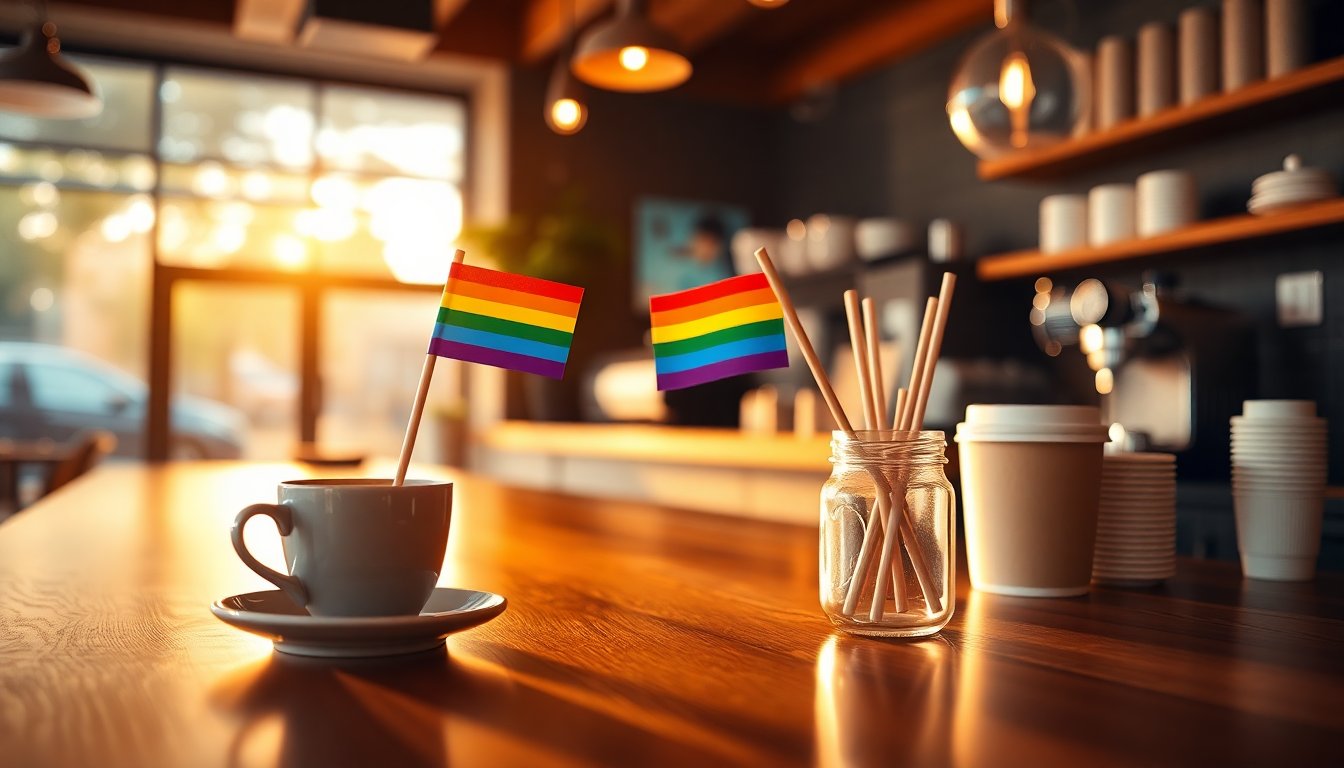
The Bay Area coffee chain Philz Coffee abruptly reversed a decision to strip stores of visible Pride symbols after a rapid wave of criticism from workers, customers and local LGBTQ+ advocates. Management initially said the change aimed to create a uniform store look, describing it as an effort to produce a more consistent and welcoming environment. That plan, however, collided with strong feelings that the Pride flag represents safety and belonging, and not merely decoration.
Within days the company announced that every existing Pride flag would remain in place and that any flags already taken down could be rehung. The company’s leader, Mahesh Sadarangani, issued an apology for the hurt the policy caused, acknowledging he had misread how removing flags would be perceived by staff and patrons who rely on visible cues of support. The reversal followed several public and private conversations involving store teams and community leaders.
How the controversy unfolded
The sequence began when staff received an internal memo outlining plans to remove Pride flags and other LGBTQ+ items from shops, a change framed by leadership as part of a shift toward a single, unified aesthetic across locations. That guidance leaked and prompted swift pushback: employees organized, customers expressed disappointment online, and a growing petition called on the company to reverse course. Critics argued the move came on the heels of Philz’s sale to a private equity buyer, raising concerns that new owners were deprioritizing the chain’s historic ties to queer communities.
Employee activism and community pressure
Current and former baristas were central to the response, saying the flags are not trivial branding but visible assurances that a space is welcoming. A colleague-started Change.org petition described the flags as providing crucial signals for LGBTQ+ staff and visitors. Within days the petition drew thousands of signatures and amplified staff testimony that taking flags down felt like erasure. In several stores, employees explored alternate ways to show solidarity—such as wearing Pride pins or customizing name tags—while urging leadership to reconsider an approach they saw as tone deaf.
Public figures and local advocacy
Political and civic voices also weighed in. Elected officials and local advocates used social media and public statements to criticize the decision, framing it as an affront to San Francisco’s long-held culture of inclusion. Leaders from San Francisco Pride engaged directly with company executives, and those conversations were described as meaningful by both sides. The advocacy group’s input emphasized that symbolic gestures like flags carry practical impact, especially amid an environment where LGBTQ+ people experience heightened hostility in other arenas.
Company background and the path forward
Philz began in San Francisco’s Mission District in 2003 and grew into a multi-state operation. In 2026 the chain was acquired by private equity firm Freeman Spogli for $145 million, a transaction that changed ownership structure and, according to some former employees, affected employees’ equity outcomes. The brand now operates dozens of locations across California and in Chicago, and leadership says each of its 82 stores will feature artwork and displays shaped by local teams and neighborhoods.
Following in-person meetings between the CEO and trans leaders from San Francisco Pride, management committed to restoring any removed flags and to working with staff to design store artwork that truly reflects local communities. The CEO’s public statement acknowledged the harm done and pledged humility and listening going forward. Moving from a top-down directive to collaborative design sessions was presented as the next step, with an emphasis on centering employee voices and neighborhood identity in future decisions.
What this means for customers and staff
The episode highlights how corporate policy, employee activism and community advocacy can interact quickly in a connected city. For many staff and patrons, the outcome—the reinstatement of Pride flags—was a concrete reassurance that symbolic markers matter. For leadership, the incident underscored the reputational and operational risks of removing long-standing community signals without meaningful consultation. The company says it will continue dialogue with its teams and community partners as it implements new aesthetic guidelines.
At its core, the story is a reminder that public-facing symbols like the Pride flag function as more than decoration: they are practical indicators of welcome, and when removed can cause real harm. Philz’s reversal shows how rapidly held decisions can be reversed when employees and community organizations mobilize, and it leaves open questions about how companies balance uniform branding with neighborhood-specific expressions of inclusion.


