
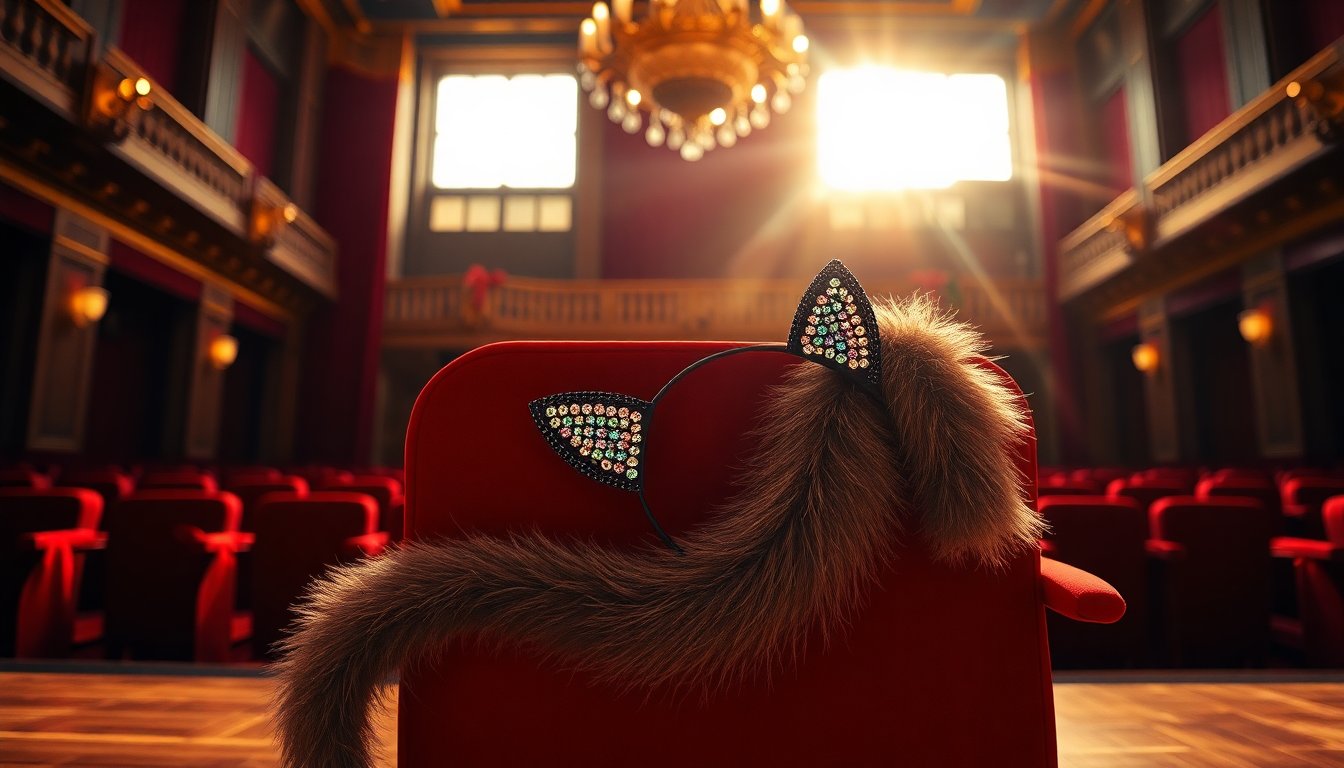
What began as an offhand remark among roommates evolved into a full-scale theatrical reinvention. Writer and co-director Zhailon Levingston first imagined staging Cats: The Jellicle Ball without literal felines, and a fortuitous introduction to director Bill Rauch at the Perelman Performing Arts Center accelerated that impulse into production. After a workshopped run off-Broadway in 2026, the piece moved to the Broadhurst Theatre, opening there on April 7. The project benefitted from a high-profile producing roster that includes figures such as Law Roach, Cynthia Erivo, and John Legend, and a surprisingly cooperative response from Andrew Lloyd Webber and his team, who set creative boundaries but allowed artistic freedom.
The creative pivot is simple to describe and rich in consequence: swap the London alley for a competitive ballroom held in a Harlem warehouse. The show keeps most of the original numbers intact, but repackages characters and songs into the categories and archetypes of ballroom culture. In this new framework, familiar figures are recast as ballroom personae—Grizabella appears as a fem queen, houses like the fictional House of Dots stand in for the original Jellicle clan, and audience members travel through judged categories. Veteran performer Ken Ard, who danced in the original Broadway production, opens as DJ Griddlebone, using vinyl and crate-digging to bridge past and present, while the music remains a connective thread between eras.
Mapping performance: ballroom vocabulary and staging
The production actively invites curiosity rather than exhaustive exposition. Projection designer Brittany Bland assembles a photo montage that traces nearly a century of queer underground gatherings, starting with the early Hamilton Lodge Ball—historically called the Faggots’ Ball—and progressing through the midcentury blues clubs where Ma Rainey and Bessie Smith performed. Langston Hughes once described those spectacles as “spectacles in color,” a line the show echoes as it honors pioneers. The montage culminates with an image of Crystal LaBeija, widely acknowledged as a foundational mother of modern ballroom, a lineage the production explicitly reveres.
Categories, styles, and what they mean
To translate the musical’s episodic format, the creative team overlays ballroom categories like body, realness, and tag-team performance onto the Jellicle roster. The work explains that realness is a performative skill that can function as camouflage or survival, and that voguing encompasses a spectrum of technique from the angular precision of the old way to the fluid improvisation of the new way. These distinctions are treated as living practices rather than museum pieces: the staging offers both demonstration and deference, celebrating technique while prompting viewers to seek further education.
Costume, choreography, and the weight of influence
Costume designer Qween Jean created an extensive wardrobe—more than 500 pieces—with many garments hand-built or customized. Her choices range from a wink-and-nod tailored suiting that reveals a glittering Union Jack corset to more overtly playful moments like a glitter-encrusted jock strap for a flirtatious Rum Tum Tugger. The production reserves one of its most sumptuous looks for André De Shields as Old Deuteronomy: a lush purple ensemble that frames his major solo, “The Moments of Happiness,” in which his sustained vocal note elicits stunned applause. De Shields embraces the joyous, communal energy of the piece and calls performance itself a kind of revolution.
Choreography and mentorship
Movement is central: co-choreographer Father Icon Arturo of the House of Miyake-Mugler and his team map ballroom’s evolution across the stage. Dancers like assistant captain Dava Huesca (Rumpleteazer) trace personal trajectories from conservatory training to ballroom floors, crediting mentors and icons such as Leiomy Maldonado for unlocking new expressive possibilities. Intergenerational ties are visible in casting choices: ballroom elder Junior LaBeija appears as Gus the Theater Cat, and pioneer figures are honored in both image and name, keeping historical continuity central to the show’s design.
Ethics, acknowledgment, and why it matters
Presenting an underground queer tradition on large commercial stages raises inevitable ethical questions. The team foregrounds respect for originators and the complexity of cultural exchange: the makers acknowledge past controversies, such as the way films like Paris Is Burning profited while many participants did not. Director Zhailon Levingston and performers alike emphasize stewardship over extraction, using the platform to elevate voices who laid the groundwork but were sidelined by mainstream visibility. The production insists viewers do their homework, learn terminology, and ask for context rather than assume ownership.
The show also confronts current political tensions: even as trans and queer performers gain unprecedented stage presence, civil rights are under attack in many parts of the country. Against that backdrop, the revival positions itself as an act of celebration and remembrance—a theatrical space where lineage, craft, and joy coexist. The cast and creative team strive to make the work both entertaining and educative, honoring elders like Crystal LaBeija and contemporaries such as Chasity Moore (Temptress) while inviting audiences to witness a history often kept in the margins. As one cast member puts it, there’s no category for ugly: everyone gets to take a bow.


