Netflix’s latest series The Body drops viewers into the late-fall of 2004, where the all-girls dance squad of St. Mark’s Catholic School rehearses beneath orange-tinged leaves while navigating a world that treats lesbian desire as a joke. The show blends the glossy aesthetic of early-2000s teen media with a religious-horror premise, turning a high-school routine into a ritualistic nightmare.
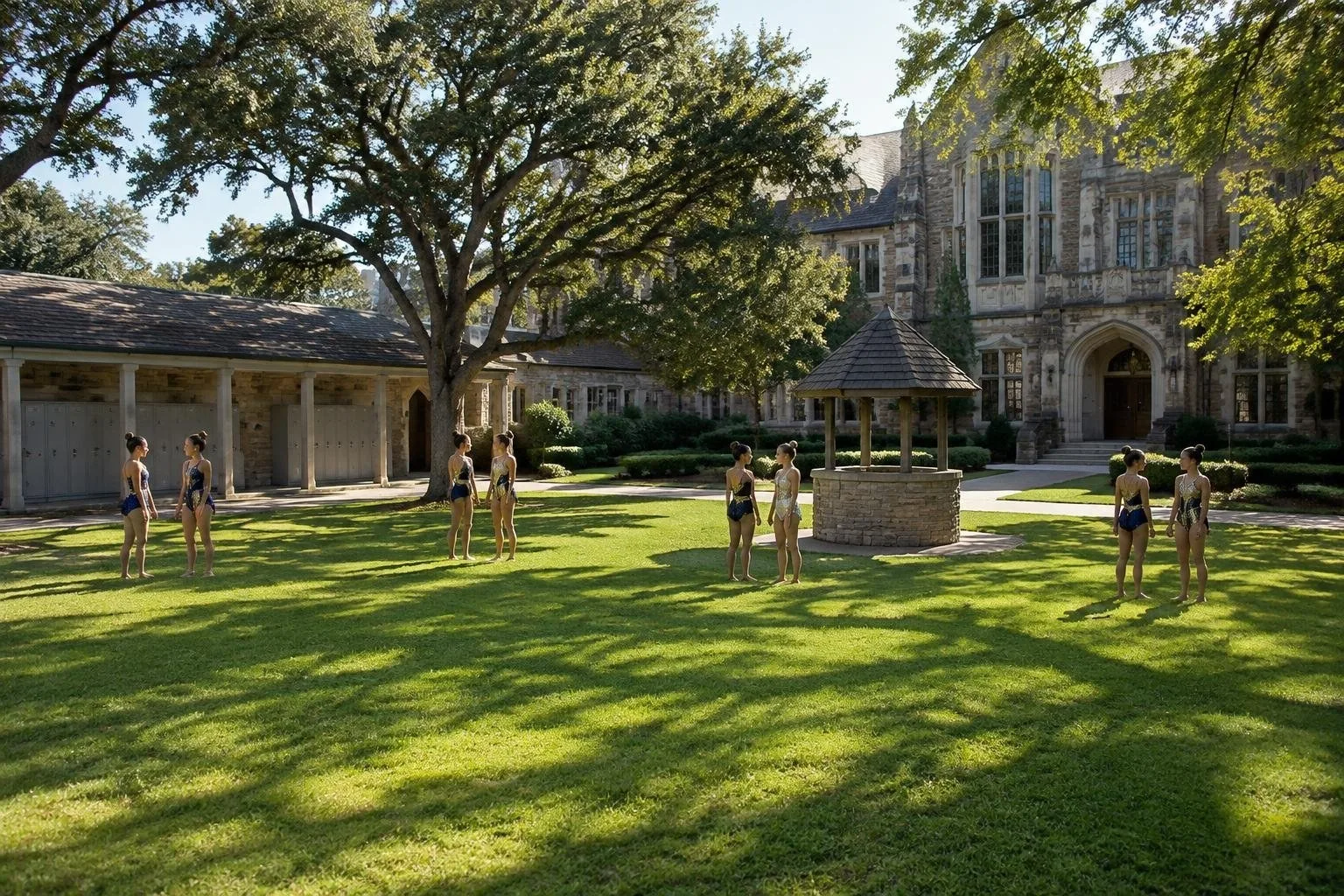
The opening scene places the Lions dance team on a sun-dappled lawn, stretching in mirrored pairs. When Elise (Sara Boustany) captures the moment on camera, she jokes, “You guys look like a bunch of dykes,” prompting a synchronized laugh that hints at the fragile camaraderie that will soon crack. Father Franklin, the priest of St. Mark’s, practices a sermon quoting Corinthians: “a body is one, though it has many parts…” – a line that foreshadows the literal and figurative fragmentation awaiting the squad.
Setting and visual style of The Body
The series leans heavily on the visual language of the early 2000s: turquoise leotards that glitter like cheap sequins, rhinestone crosses sewn onto velour outfits, and face gems that catch every flicker of fluorescent light. Each choreography is staged like a living tableau, the dancers arranged as if they were figures in a painting. The contrast between the bright, almost saccharine costumes and the dark undertones of the plot creates a gritty camp atmosphere, a deliberate clash that mirrors the characters’ internal battles.
Set pieces such as the Holy Inn Hotel and the ominously named Devil’s House serve as backdrops for secretive rituals. The Halloween party at the Devil’s House becomes a turning point when the Lions attempt a drug-induced initiation for newcomer Grace (Sofia Wylie). Their attempt to frame the ceremony as a sacrificial offering to Satan goes awry, leaving Grace in a coma and igniting a wave of hysteria that sweeps the small town.
Characters and the clash of faith and desire
The central figure, Anya (Kristina Bogic), is the captain of the Lions. Blonde, wealthy, and surrounded by the expectations of a privileged family, she grapples with an underdeveloped sense of purpose and a boyfriend on the swim team who cannot break her resolve. Her best friend Elise serves as the foil – dark-haired, sardonic, and carrying a heart full of smelted grief. Their dynamic oscillates between angelic loyalty and devilish provocation, a tension that drives much of the narrative.
When the team loses Maddie to a broken ankle, they hold auditions for a replacement. Grace, the niece of Father Franklin, impresses with flawless technique and a saintly demeanor, earning the nickname “Saint Grace” from Elise. Yet the real wildcard is Lisbeth (Geena Meszaros), a wiry newcomer with transparent eyebrows who arrives from West Virginia after her religious fringe-group father dies. Lisbeth and her brother Leo (Jackson Kelly) are taken in by the Catholic church, with their mother’s illness cited as the reason for their enrollment at St. Mark’s.
Lisbeth’s desperate wish to belong leads Anya to invite her to the Halloween party, where the ill-fated initiation escalates the conflict between the squad’s devotion to performance and their hidden yearning for acceptance. The fallout forces Anya and Lisbeth to confront the consequences of their choices, while Elise and Anya’s increasingly intimate friendship begins to fracture under the weight of secret desires.
Themes: girlhood as religion and 2000s queer anxiety
Creator Quinn Shephard framed the series around the question, “What if girlhood were treated like a religion?” The answer materializes in the form of hierarchies, rites, and exclusionary codes that mimic ecclesiastical structures. The Lions operate as a quasi-congregation: they share symbols (rhinestone crosses), enforce discipline (synchronized stretches), and expel outcasts (Lisbeth’s initial marginalization). Their rituals—ex-citing drugs as “the body of Christ,” conducting mock exorcisms at sleepovers, and sleeping in “slutty nun” costumes—blur the line between sacred and profane.
The series also captures the paradoxical culture of 2004: teenage girls draped in low-rising velour pants and thongs, consuming sex-positive media while simultaneously shouldering a heavy stigma around desire. This tension is embodied in characters like Maddie, whose eating disorder hints at deeper body-image struggles, and Grace, whose coma becomes a catalyst for the town’s longing for miracles. The show’s soundtrack, fashion choices, and pop-culture references act as a time capsule, while the underlying message interrogates how early-2000s messaging both empowered and shamed burgeoning queer identities.
In the end, The Body offers more than a stylish horror story; it provides a commentary on how faith, performance, and sexuality can intertwine to create both community and catastrophe. Its blend of glitter, grief, and gothic symbolism makes it a standout entry in Netflix’s catalog, promising viewers an obsession that lingers long after the credits roll.