
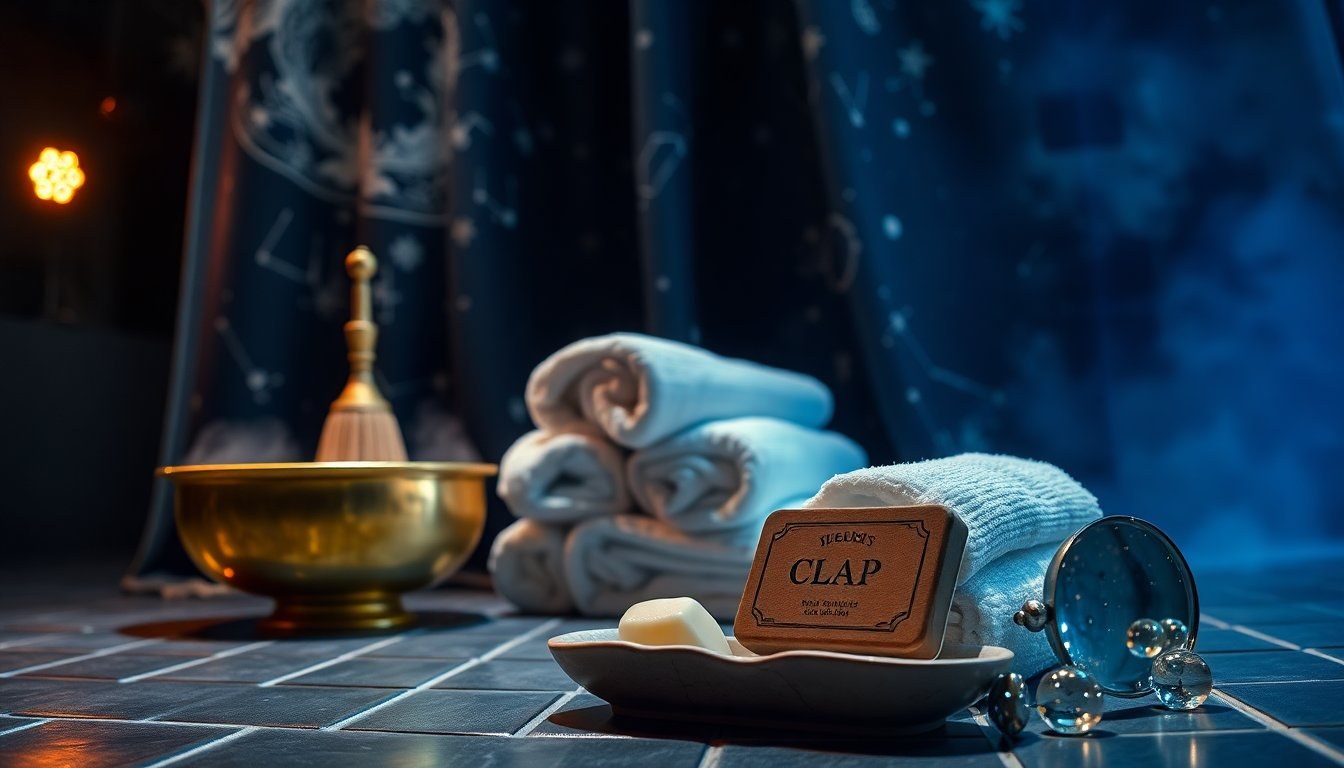
The first moments of Syrian Soap collapse time with a familiar domestic sound: someone brushing under a curtain while the strains of Najat Al Saghira’s “Bahlam Maak” melt into Tal Bachman’s “She’s So High.” Onstage, L.A.-based comedian, clown, and mediator E. Zalaan slips into an eccentric persona who bangs a wooden shower brush, peeks through curtains, and alternates between tender, nostalgic gestures and sharp, comic interruptions. The opening sets the tone for a piece that is equal parts intimate ritual, absurdist theater, and political elegy, inviting audiences to both laugh and reckon with history.
Framed as an imaginative bathing salon in the cosmos, the piece stages conversations across generations and borders while leaning into traditions such as the hamam and the famed Aleppo sabun ghar. Syrian Soap toured as part of The Joy Who Lived at the Hudson Theater in Los Angeles from March 31 to April 12 and will appear at the Hollywood Fringe Festival in Los Angeles from June 13 to June 20, followed by the National Queer Theater’s Criminal Queerness Festival in New York City from June 24 to June 27. The show balances levity and gravity to make complex subjects accessible.
Where the work comes from: politics, ritual, and craft
Zalaan traces the impulse for the show to tumultuous moments during the Syrian Revolution and personal reckonings that followed. They recount creating a private commemoration after the killing of journalist Raed Fares, asking how to continue a life of witness, and hearing an answer that urged them to use their voice to tell the truth. From that seed, they paired political urgency with training in performance: a steady diet of workshops, meditation, writing, and ensemble work informed the structure. The piece borrows methods from contemporary LA clowning and traditional stand-up to craft a hybrid form that foregrounds vulnerability as political labor.
Influences, homage, and the accidental echoes of tradition
The characters and tonal palette draw heavily from the comedy lineage of Syria. Zalaan channels figures like Duriad Lahham’s gentle fool archetype and Naji Jaber’s macho-but-soft persona to embody two poles of the performance: a wise, exasperated Ancestor and an anxious, present-day Descendant. A corded telephone that rings throughout the show became a bridge between eras; its function unintentionally mirrored an old Ghawwar play where a drunk character answers a call from the afterlife. That discovery was a revelation for Zalaan: an unexpected continuity between their memory-driven inventions and the region’s comedic canon.
Characters, props, and the mechanics of meaning
At the center is the Ancestor: a 2,000-year-old embodiment of a SWANA man wrapped in towel and keffiyeh, bubbles over his chest, wearing ub-ab (wooden sandals), and brandishing a large moustache. He performs a ritualized self-care sequence using playful props—a coffee dalla al qahwah poured as if it were cosmic water, bubble wrap as suds, a face mask, and a ringing telephone that connects him to his Descendant. The staging is meticulous; every object becomes a metaphor for exile, memory, and resilience. The Ancestor dispenses blunt, often comic counsel on everything from anxiety to family pressure, nudging the audience to reflect and respond.
Interactive comedy that refuses easy sentiment
Audience participation is integral: spectators are invited onstage to hold props, answer the phone, or receive tea while the Ancestor offers ancient-sounding advice on contemporary dilemmas—taxes, parenting, failed situationships. The Descendant character bursts in wearing a shirt that reads “rainbow” in Arabic, a tarboosh, and tiny ub-ab on their fingers; a briefcase of symbolic items—lotion, an olive branch, a Syrian flag—becomes a toolkit for physical metaphors. Scenes swing from mini stand-up sets about gender and dating to tender, surreal tableaux in which slippers protest, flee, and return, carrying the weight of class, silence, and resistance.
What the piece asks of us and why it matters
Underneath the giggles is an insistence on facing power honestly. Zalaan uses the comic frame to hold contradictions: grief next to joy, dignity amid humiliation, ancestral memory alongside the messy present. The piece refuses to turn trauma into mere spectacle; instead it invites the audience to consider: how will you speak truth to power? How do you honor lineage while living in exile? The performance ends up feeling like a communal bath where stories are washed, stitched, and returned to the body, leaving viewers both cleansed and unsettled in a productive way.
For anyone in Los Angeles or New York in June, seeing Syrian Soap offers more than entertainment—it’s a lesson in how humor can be used as a tool for preservation, protest, and joy. By marrying theatrical craft with the weight of history and the warmth of domestic ritual, Zalaan has created a work that insists art can keep memory alive and help people carry forward, even in the hardest circumstances.


