During LGBTQ+ History Month, historians and activists turn their gaze toward figures whose lives pre-date modern terminology yet embody its spirit. One such figure is the Publick Universal Friend, a person who claimed divine rebirth in 1776 and lived without gendered pronouns for more than four decades. The Friend’s memoirs, written after a bout of typhus claimed the body known as Jemima Wilkinson, describe a miraculous transition that left them identifying solely as a spiritual being. Their attire blended masculine and feminine elements—cravats beside robes—while their preaching championed free will, pacifism, and the abolition of slavery, echoing Quaker ideals while carving a distinct theological path.
Reclaiming a misgendered legacy
Despite the Friend’s explicit declaration in an 1820 will that they were no longer Jemima Wilkinson, many scholars have persisted in labeling the individual with gendered terms, often deadnaming them. Queer historian Hanna Kawamoto argues that such mischaracterization is a form of erasure, insisting that the Friend should be understood as spiritually unsexed. By centering the Friend’s own language—no pronouns, no binary identifiers—Kawamoto demonstrates how early non-binary expression can be recognized on its own terms, rather than forced into contemporary categories.
Chicago’s pioneering Pride march
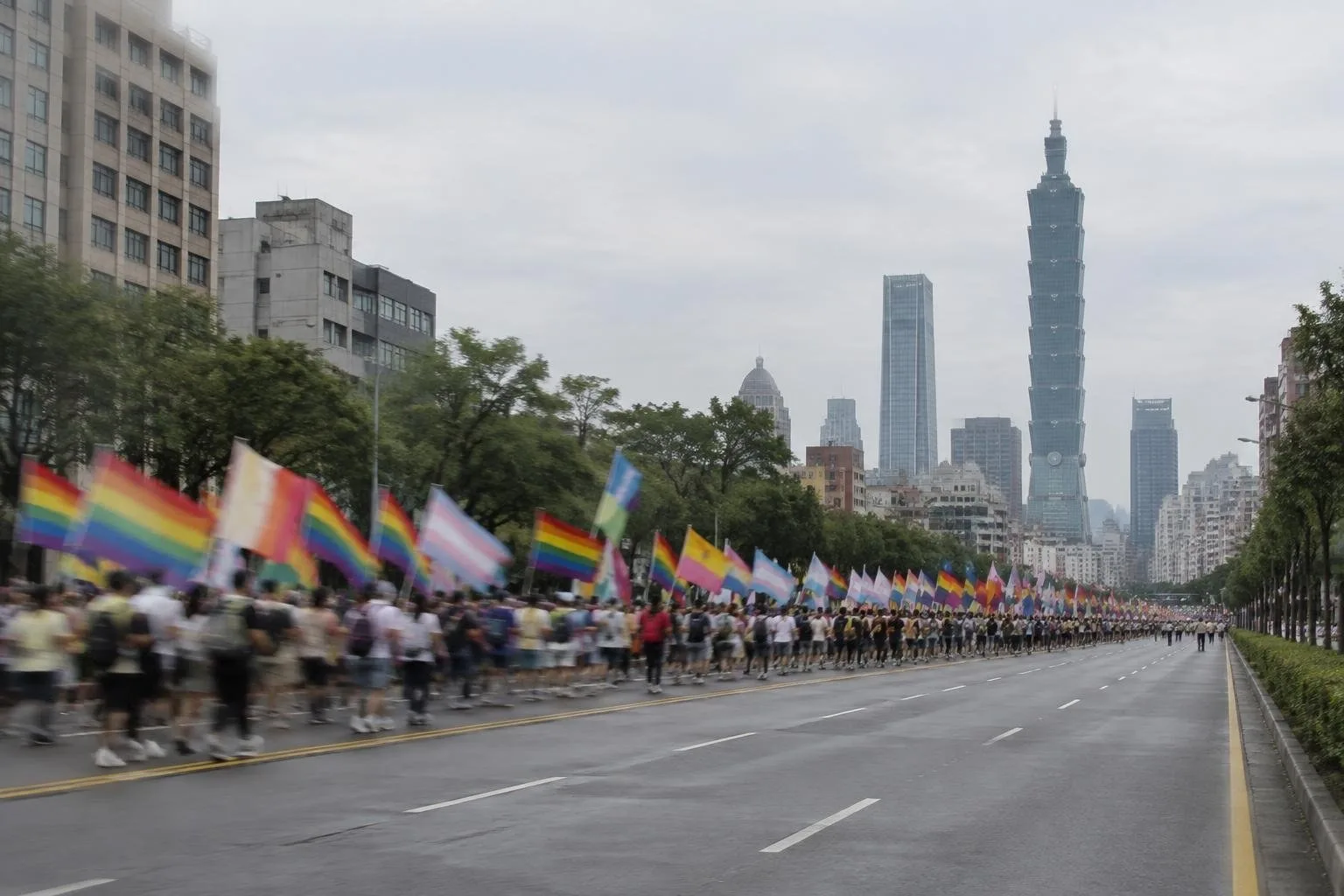
Fast forward to June 27, 1970, when a modest crowd of about 150 activists gathered in Chicago’s Gold Coast before parading through Washington Park toward Michigan Avenue. This event, predating the larger New York and Los Angeles demonstrations by a day, is widely acknowledged as the world’s first Pride march. Participants, including co-founder of the Chicago LGBTQ Hall of Fame Gary Chichester, marched without floats or glitter, focusing instead on a simple demand for equality. Archival newsletters from the Gerber-Hart Library preserve pamphlets that detail the march’s route and its humble, protest-oriented character.
Why the 1970 march matters today
Chicago’s early demonstration set a template for future Pride events, illustrating how community visibility can evolve from street protest to global festival. Yet, as the city prepares plaques and educational programs to commemorate the march, activists warn that the story is often eclipsed by later, larger parades. Chichester stresses that historical recognition is essential: “If we forget our roots, we lose the power of our narrative.” By linking the Friend’s 18th-century spiritual rebellion to the 1970 march’s demand for civil rights, a continuum of queer resistance emerges.
Modern attempts to erase queer history
While scholars celebrate these milestones, the current political climate threatens to erase them. Recent executive orders from the Trump administration have labeled the inclusion of LGBTQ+ narratives in schools, museums, and parks as “radical indoctrination.” Such language aims to strip the public record of figures like the Publick Universal Friend, pioneers such as Audre Lorde, Josephine Baker, Silvia Rivera, and Marsha P. Johnson, and of community actions like the 1970 Chicago march. Advocates argue that denying these histories not only harms queer youth but also undermines the nation’s commitment to a full, inclusive past.
Why remembering matters
Inclusive historiography serves a dual purpose: it honors those who fought for liberty and provides present-day LGBTQ+ individuals with role models whose lives validate diverse identities. When archives and curricula acknowledge the Friend’s gender-defying existence, Chicago’s first Pride, and the countless queer families shaping America, they create a narrative that resists the erasure tactics of present-day policymakers. As Anna Santa Maria of Family Equality notes, visibility in history fuels empowerment, turning everyday acts—like walking into a supermarket with a child—into radical statements of belonging.
Celebrating queer ancestors during LGBTQ+ History Month therefore becomes an act of resistance. By remembering a 1776 resurrection, a 1970 march, and the ongoing battle over curricula, we affirm that the imagined future of equality is already rooted in lived experience.