
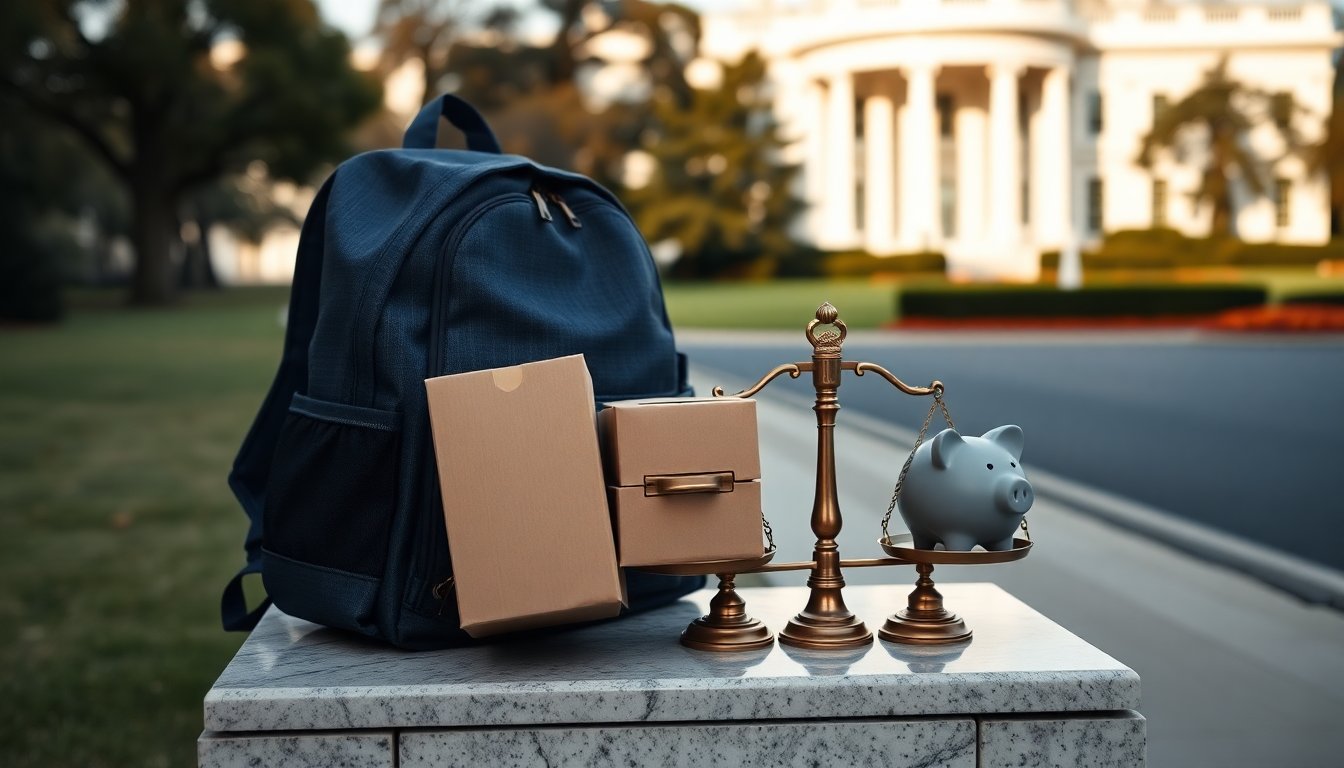
The White House arranged a staged delivery to illustrate its tax agenda, sending a DoorDash order to the grounds and introducing driver Sharon Simmons as a living example of the administration’s message. The event was built around the no tax on tips claim, an element of the larger Working Families Tax Cuts idea, and officials described Simmons as a full-time Dasher since 2026 who received about $11,000 in tips last year. The presentation framed those tip earnings as now tax free, and used Simmons’ story to show how the policy translates into immediate household relief for service workers and gig employees.
Simmons was portrayed by aides as someone whose family finances had been strained when her husband cut back his hours during cancer treatment in 2026; the White House said the tax change helped pay medical bills and replace lost income. The administration positioned her as a symbol of how broad tax changes could benefit millions, a narrative that included other statistical claims from government communications. What was intended as a concise human vignette soon expanded into a public interaction that shifted the focus away from the original policy point.
The exchange outside the Oval Office
During a short press moment, President Trump pivoted to a different subject, asking Simmons whether she thought men should play in women’s sports. Simmons replied that she did not have an opinion, emphasizing instead that she was present to talk about the tax change. The president pressed the matter, then abandoned it when she declined to engage. At another point he reached into his pocket and handed Simmons $100, a gesture that briefly punctuated the encounter. The interaction demonstrated how a carefully staged appearance can be interrupted by spontaneous lines of questioning that take on a life of their own.
The moment also generated rapid online commentary. Advocacy groups highlighted the oddity of the exchange, with one prominent human rights organization responding on social media with a quip about the fast food delivery. For Simmons, the detour was tangential to the issues she and her family were confronting; during the conversation she mentioned a quieter, more personal detail about her husband, noting he had written a book on humility during his treatment, a remark that undercut the political theater and returned attention to private struggles under public policy discussions.
Policy claims and the broader economic pitch
Officials used Simmons’ presence to underscore a list of claimed benefits tied to the Working Families Tax Cuts. Among the figures cited were that more than 5.5 million Americans had claimed the no tax on tips break with an average deduction around $7,100, and that over 25 million people had claimed a no tax on overtime benefit averaging about $3,000. The administration also described a typical family seeing a boost in take-home pay, broader tax relief for households earning between $15,000 and $80,000 per year, and an expanded standard deduction used by a large majority of taxpayers. Other elements of the package were presented as permanent supports for families, including expanded childcare access and a standing paid leave tax credit.
Those fiscal claims were paired with labor-market statistics intended to show a wider economic upswing. The White House noted a manufacturing resurgence that added 15,000 jobs in March and marked the first positive manufacturing job growth in the first quarter of 2026 after several years of decline, alongside construction gains of 26,000 jobs in March. Reported wage growth and higher labor force participation for prime-age workers were used to buttress the argument that policy shifts were tangibly improving worker outcomes, an assertion tied back to the message Simmons was brought in to illustrate.
What this moment reveals
The staged delivery is an example of modern political communication: a single, humanized anecdote is intended to make a complex policy relatable. The choice of a gig worker who depends on tips was deliberate, and the story had elements that resonated — medical hardship, reliance on informal earnings, and a concrete dollar figure tied to relief. Yet the actual interaction on the White House lawn highlighted a tension that often appears in these encounters, where scripted messaging collides with unscripted political impulses and the broader national debate over cultural issues, producing images and soundbites that can overshadow the original policy point.
Political theater versus lived experience
Beyond the optics, the episode raises questions about how policy narratives are constructed and received. A family’s struggle with medical bills and lost income is fundamentally about economic policy outcomes, while the presidential pivot to a culture war question illustrated how public appearances can be repurposed in real time. For observers, the takeaway involved both the substance of the tax changes and the performative nature of high-profile events, reminding readers that single-person stories can be powerful communicators but are also vulnerable to being reframed into wider political controversies.


