When two editors from Autostraddle whispered, “HAVE YOU WATCHED THE BODY YET?”, they weren’t just asking about a new binge. They were trying to contain a flood of velour-and-rhinestone brilliance that had already taken over their conversations. The Netflix series, released as an eight-episode run, taps into the anxieties of 2004 girls in a Catholic school, while its soundtrack hijacks the era’s most memorable pop punches.
Riese and the article’s author were granted early access, an advantage that quickly became a curse: for days the only people they could discuss the show with were each other. Their obsession resurfaced a dormant love for television and set the stage for a deep dive into the music that fuels every scene. Below is a comprehensive look at how the show’s creators built a playlist that feels both nostalgic and unsettling.
Premise, creators, and the 2004 time capsule
The narrative follows the St. Mark’s Lions, a high-school dance team whose Halloween night spirals into visions, hysteria and hints of possession. Quinn Shephard wears three hats (creator, director and co-showrunner) while Gina Gammell co-runs and produces through her company Felix Culpa. Both have spoken about gathering a crew whose ages matched the characters: “many of our heads of departments were 16, 17, or 18 in 2004,” Gammell explained. That personal connection helped them remember the precise soundscape that defined their teenage years.
Shephard adds that the series is a blend of teen psychodrama and religious horror, deliberately set in the early aughts to exploit the cultural moment when pop was simultaneously carefree and emotionally charged. The result is a show that feels like a confessional booth, but the hymns inside are chart-topping singles rather than liturgical chants.
Crafting a soundtrack that feels like a mixtape
The music-supervisor team, led by Shephard, treated the soundtrack as an extension of the plot. “We constantly had people sending their bangers from the time,” Gammell said, noting that personal favorites such as Daddy Yankee’s “Gasolina” earned a spot. The goal was two-fold: amplify tension when needed, and defuse it with an unexpected pop blast. Shephard describes the mix as a balance of turn-up music and softer, moodier tracks that echo the characters’ inner turmoil.
One of the most surprising inclusions, according to Shephard, is Kylie Minogue’s “Confide in Me.” She calls it a “deep cut” that still resonates enough for her to hope it will spin in clubs. The soundtrack also leans heavily on artists who defined the late-1990s and early-2000s: Kelly Clarkson, No Doubt, Björk, Ciara, and even a sprinkling of church-related needle drops.
Age-specific nostalgia and a personal favorite
Because many crew members grew up during the same period they’re depicting, the playlist feels less like a generic retro collection and more like a shared memory box. Gammell’s personal pick, “Gasolina,” represents that youthful exuberance, while Shephard’s love for Björk’s “Unravel” provided an emotional anchor for Episode 7’s climactic scene. She notes that she actually cried while editing to that moment, underscoring how the right song can transform visual storytelling.
Key tracks and how they shape each episode
Below is a curated sampling of the most impactful songs, organized by episode. The full list is available for streaming, but these highlights illustrate the careful pairing of narrative beats with musical moments.
Episode 101: “Slutty God”
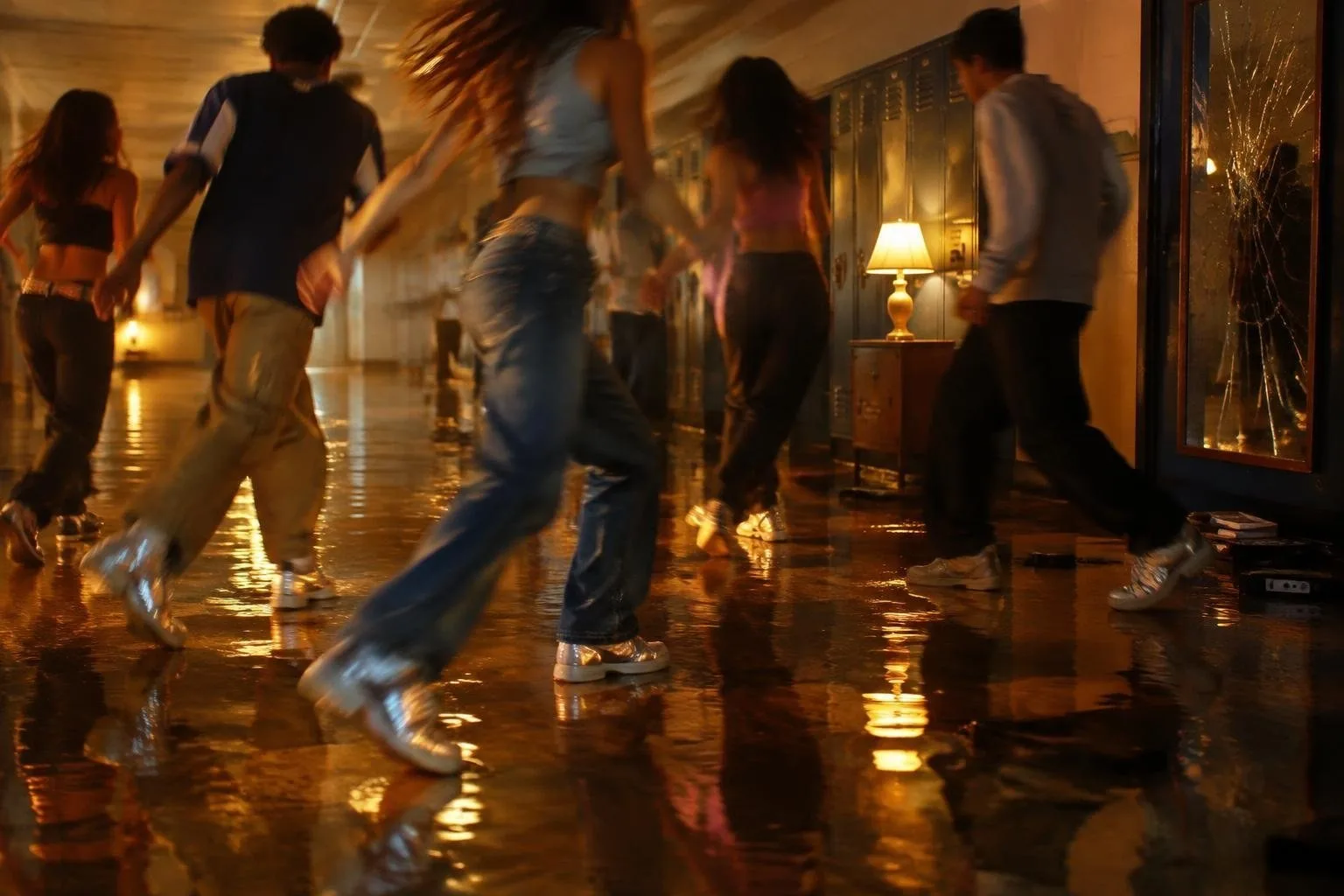
The opening episode sets the tone with Kylie Minogue’s “Confide in Me” and Ciara’s “Goodies,” juxtaposing a sultry pop anthem against a scene of religious ritual. No Doubt’s “It’s My Life” underscores the girls’ rebellious streak, while DMX’s “Party (Up in Here)” injects raw energy into a tense hallway confrontation.
Episode 102: “Jesus, Literally”
Kelly Clarkson’s “Breakaway” appears early, offering a hopeful lift before the episode dives into darker territory. The tracklist then flips to “Gasolina” by Daddy Yankee, a high-octane moment that mirrors the characters’ frantic search for answers. Peaches’ “Fuck the Pain Away” and Sean Paul’s “Get Busy” add club-ready flair to scenes that blend hysteria with teenage partying.
Episode 103: “Unholy Thoughts”
This installment leans on emotional resonance: Kelly Clarkson’s “Breakaway” returns, while Michelle Branch’s “Are You Happy Now?” punctuates a moment of self-reflection for the lead dancer. Kylie Minogue’s refrain reappears, tying the episode back to the series’ opening motif.
Episode 107: “Holy Trinity”
Here the atmosphere turns solemn. Elvis Presley’s “Crying in the Chapel” sits beside Gabriel Fauré’s “Requiem, Op. 48: VII. In Paradisum,” creating a haunting juxtaposition of secular and sacred. Björk’s “Unravel” crowns the episode’s climactic revelation, delivering an ethereal yet unsettling finish.
Episode 108: “Coming Out”
The series closes with a burst of unapologetic confidence. Khia’s “My Neck, My Back (Lick It),” Britney Spears’s “Not a Girl, Not Yet a Woman,” and a custom “Walk With Me” cover blend humor with a final nod to the characters’ newfound agency.
Across all eight episodes, the soundtrack functions as a character in its own right, guiding viewers through moments of terror, desire, and revelation. Whether it’s a nostalgic pop anthem that sparks a smile or a solemn hymn that deepens dread, each song was chosen to echo the internal and external battles of the girls at St. Mark’s.
For anyone wishing to relive the series on their own terms, the full playlist is streamable online. Press play, let the turn-up music wash over you, and experience how a carefully curated mixtape can transform a teen horror into a musical time-travel experience.