
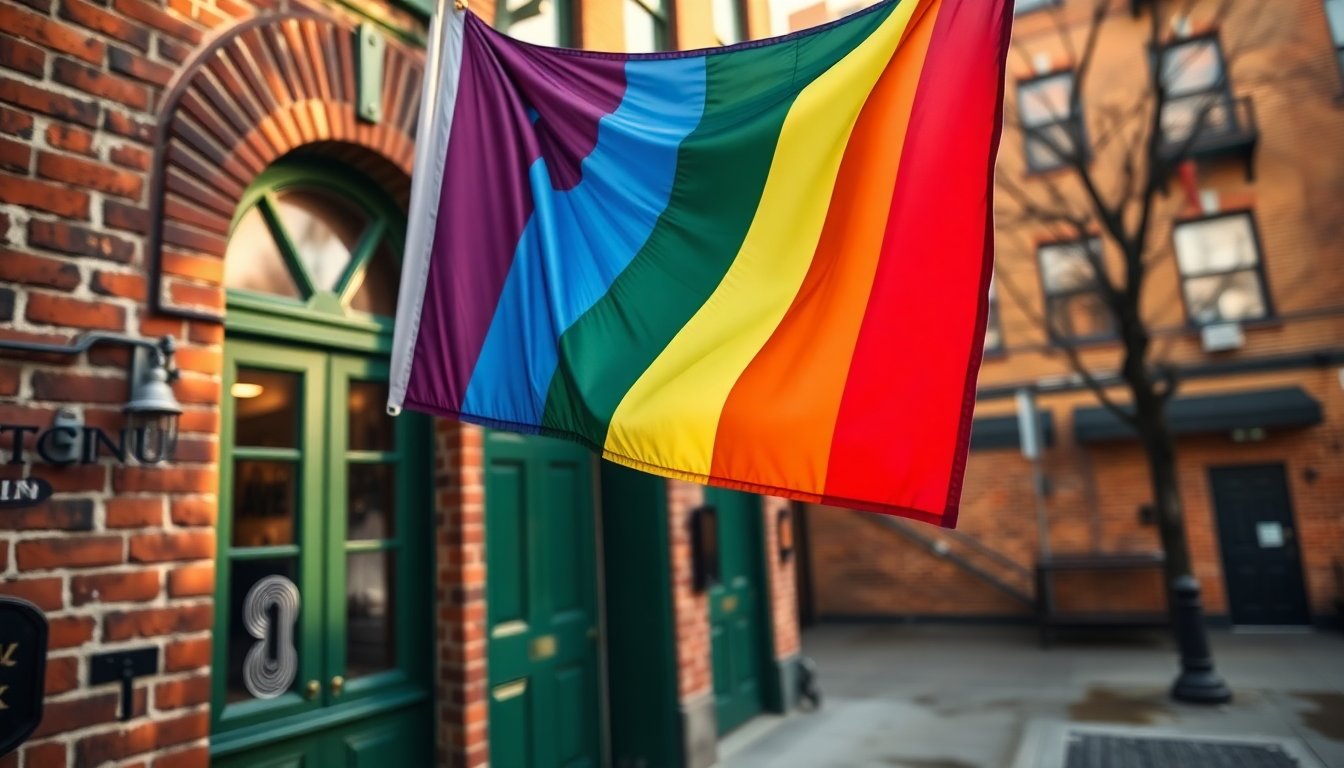
The removal of a rainbow banner from the Stonewall National Monument in Manhattan earlier this year sparked immediate public outcry and prompted a legal response. Federal park officials took down one of the flags that had been flown at the site, saying the action followed agency guidance. Local advocates, preservationists, and legal teams called that explanation inadequate, framing the removal as an attempt to strip visible recognition from a place widely regarded as central to modern LGBTQ+ history.
After the banner came down in February, a coalition led by the Gilbert Baker Foundation, Village Preservation, and Equality New York filed suit with representation from Lambda Legal and the Washington Litigation Group. The plaintiffs argued the action violated federal policy and singled out the LGBTQ+ community. The administration has since agreed to a resolution that requires the park service to restore the Pride flag and to keep it displayed except for brief periods for maintenance or other practical reasons.
The settlement and what it requires
The legal settlement is a pivotal element of the story: under the agreement, the National Park Service will rehange the Pride flag on the monument’s official flagpole within seven days and retain it permanently. The government’s filing acknowledges that the Pride flag falls within applicable law and agency policy, specifically under an exemption that allows flags to be displayed when they provide historical context. The parties also agreed that the court will retain jurisdiction, creating a mechanism to enforce the terms if future disputes arise.
This outcome vindicates the central claim advanced by the plaintiffs: the flag served a legitimate interpretive role at a federal site dedicated to the history of LGBTQ+ activism. Lawyers for the coalition characterized the removal as arbitrary and discriminatory, while officials for the park emphasized their commitment to preserving the site’s history. The settlement documents spell out logistical details as well, including the arrangement of multiple flags on the pole in a way that complies with the U.S. flag code.
Context: what led to the removal and why it mattered
The Stonewall site commemorates protests that energized the contemporary movement for LGBTQ+ rights, and many community members view visual symbols there as more than decoration. The Pride flag had been installed as part of a longer campaign to ensure that the park’s displays reflected the full story of the place. Its removal was interpreted by activists and some elected officials as an act of erasure, not merely a technical compliance decision.
Compounding tensions were recent federal moves to limit references to transgender and bisexual people in some agency materials, which followed wider guidance directed at agencies about gender identity and programming. Advocates said those changes, coupled with the banner’s removal, amounted to a broader push to sideline certain aspects of LGBTQ+ history and policy. In response, grassroots actions quickly produced other rainbow flags at the site while the litigation proceeded.
Next steps and enforcement
Although the parties have reached an agreement, a judge must still approve the settlement to make it fully effective. If the court signs off, the National Park Service will be obligated to rehang the Pride flag and to maintain it in place, subject to the limited exceptions described in the filing. The court’s retained jurisdiction means the plaintiffs can return to federal court if the terms are not followed, which advocates say will help ensure lasting protection against future removals.
Broader implications for recognition and policy
Beyond the immediate result at Stonewall, the settlement underscores how litigation can shape the way federal sites interpret and present history. For many supporters, restoring the flag affirms that public memorials should reflect the communities they commemorate. For critics of recent administrative policies on diversity and inclusion, the dispute highlights tensions over how cultural symbols are treated on government property. The agreement therefore represents both a legal victory and a symbolic restoration of presence at a federally recognized landmark.


