
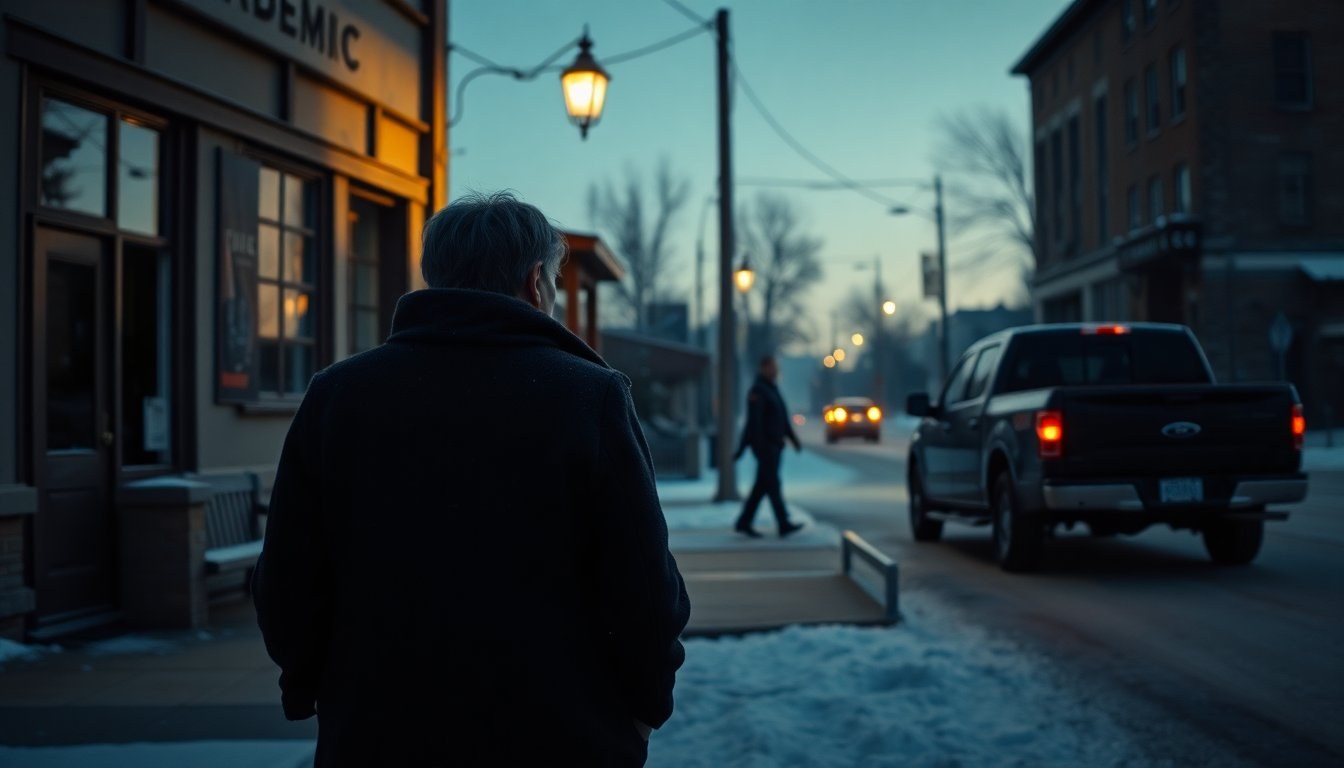
The film Normal, directed by Ben Wheatley, arrives as a compact neo-Western that quietly surprises audiences by centering a grieving trans and non-binary character at its emotional core. Starring Bob Odenkirk as Ulysses, a reserved lawman, and Jess McLeod as Alex, the late sheriff’s child, the movie unfolds in a snowbound Minnesota town where appearances hide dangerous secrets. The story moves between small-town routines and escalating violence, while also exploring themes of belonging, dignity, and allyship without resorting to spectacle.
At its heart, Normal attempts a tonal balancing act: part character study, part actioner, part social commentary. The screenplay, credited to Derek Kolstad with story contributions from Kolstad and Odenkirk, crafts a lean narrative about a community harboring illicit money for the Yakuza and the people who decide, reluctantly or enthusiastically, to keep that secret. The result is a film that often feels like two movies braided together — one quiet and humane, the other brisk and violent — and that juxtaposition is central to both its strengths and the criticisms it has drawn.
Performances and character dynamics
Odenkirk plays Ulysses as an almost radical embodiment of restraint: he is a man who prefers de-escalation, who listens before he acts. This disposition becomes the foil for Alex’s arc, a journey from grief and marginalization toward agency. Jess McLeod brings nuance to Alex, portraying them first as isolated and grieving, then gradually stepping into an action-forward role that culminates in a memorable turn in the film’s climax. Their chemistry—part mentor–mentee, part found-family—anchors much of the movie’s emotional resonance, and the offscreen support (Odenkirk executive produced McLeod’s short She’s Nonbinary) reinforces the collaborative spirit at play.
Representation and thematic focus
What sets Normal apart from many genre pieces is how it integrates a trans and non-binary protagonist into the main storyline without turning their identity into a spectacle. The script allows Alex to exist as a full person: angry, vulnerable, grief-stricken, and ultimately capable. The film also doesn’t shy from the cruelty Alex endures—ostracism, exclusion from a parent’s funeral, homelessness—yet it counters those realities with scenes of simple human dignity, where shelter, a shared drink, and attentive listening set the stage for deeper transformation. The tension between community prejudice and individual compassion is handled with subtlety rather than sermonizing.
From marginalization to action
As the plot intensifies, Alex becomes central to the film’s action sequences, transitioning into a credible and satisfying action role. Their evolution from living in a car and being dismissed as “the kid” to being deputized and standing alongside Ulysses offers a depiction of empowerment that doubles as genre pay-off. The action moments are not merely adrenaline bursts but extensions of character growth: Alex’s combativeness and cunning are framed as consequences of survival and reclamation. The use of violence is deliberate and cathartic rather than gratuitous, reinforcing the film’s investment in personal dignity.
Tone, pacing and critical reception
Not everyone responds equally to the film’s tonal switches. Some viewers and critics praise the way the quiet, humane beats elevate the material and provide an unexpected center of gravity for a neo-Western. Others find the mix of folkish small-town humor and sudden gunplay uneven, arguing that character motivations and tonal choices sometimes feel underdeveloped. Detractors point to inconsistent pacing and thinly sketched townsfolk as weaknesses, while supporters highlight the film’s courage in normalizing a trans-led action arc within a mainstream-leaning picture.
Caveats and strengths
Ultimately, Normal is a compact feature that will likely polarize viewers: those drawn to its humane core and the chemistry between Odenkirk and McLeod may find it a refreshing hybrid, while others who expect tighter tonal control or deeper ensemble characterization may be disappointed. Still, the film’s commitment to treating a trans and non-binary lead as both ordinary and heroic is notable in a landscape where such representation is often sidelined or sensationalized.
Whether you come for the snowbound suspense, the blunt moral choices, or the quietly transformative relationship at the center, Normal offers a distinct variation on the neo-Western: one in which empathy is an operative strategy and inclusion becomes part of the action. For viewers seeking a film that combines modest pleasures with moments of genuine emotional payoff, this is a work worth encountering and debating.


